Ulf Kristersson: Fund the Rich
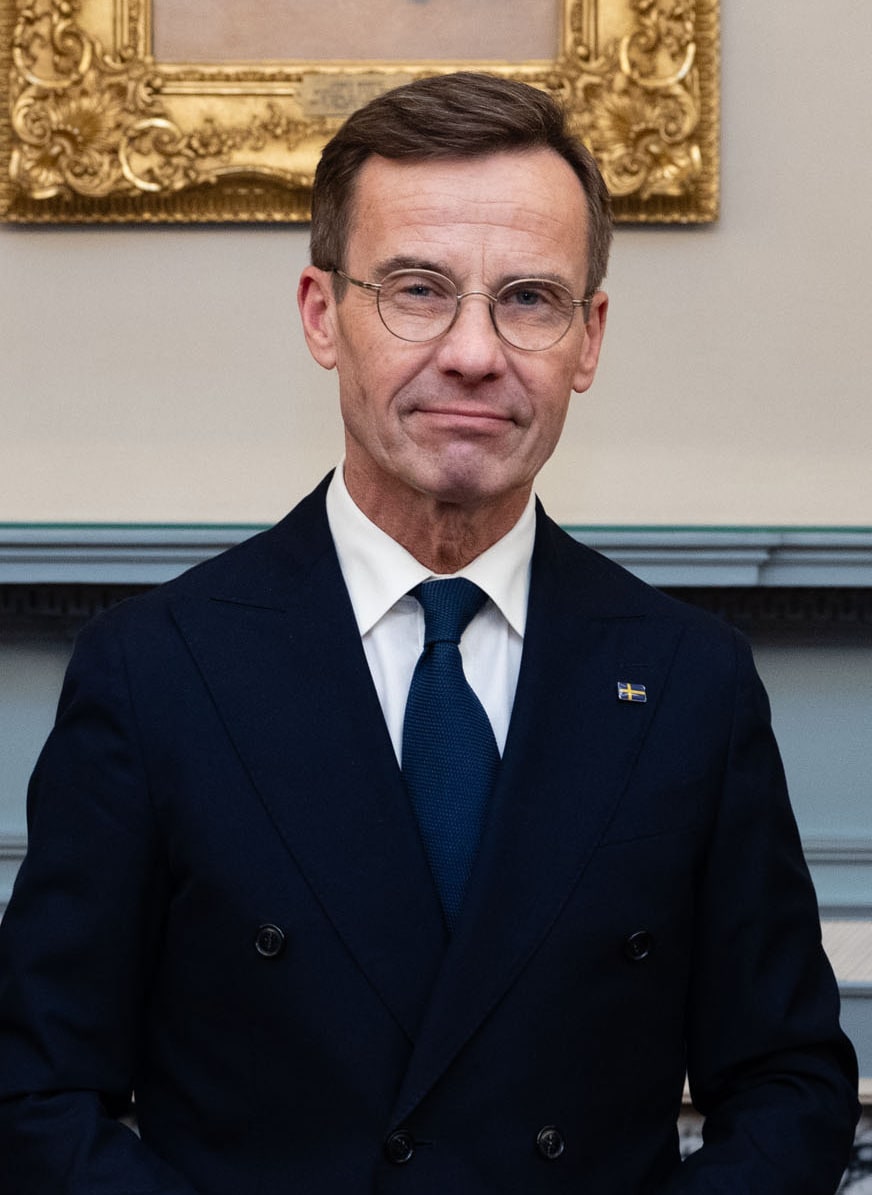
Ulf Kristersson wants Sweden's election to be a referendum on tax. His opponents should accept the invitation. Few choices reveal a government's values more clearly than deciding who gets relief first, who is told to wait and which public systems must manage with less while private incomes rise.
The opposition's charge is blunt: Kristersson has used four budgets to reward people who already have the most. The prime minister's answer is equally blunt: his government has cut taxes for ordinary workers, pensioners and families, beaten inflation and restored the idea that work should pay. Both descriptions contain facts. The argument is about their distribution and priority.
Kristersson arrived at this fight through one of Swedish politics' longest comeback stories. Born in 1963, he led the Moderate Youth League from 1988 until Fredrik Reinfeldt defeated him in a bitter contest in 1992. He worked at the free-market think tank Timbro and in communications, returned through municipal politics in Strängnäs and Stockholm, then served as social insurance minister under Reinfeldt. In 2017, he took over a Moderate Party in crisis. Five years later, he became prime minister.
Even that victory contained a loss. The Moderates fell to 19.1 per cent in 2022 and were overtaken by the Sweden Democrats. Kristersson reached office because he assembled a one-seat right-wing majority and accepted an extensive programme negotiated with Jimmie Åkesson. His political gift is not dominance. It is the ability to turn second place into the chair at the head of the table.
Tax cuts are the ideological glue of that table. The 2025 budget strengthened the earned income tax credit, reduced pension tax, removed the gradual withdrawal of the work tax credit at high incomes and introduced a tax-free base for investment savings accounts. The ISK exemption rose from SEK 150,000 in 2025 to SEK 300,000 in 2026. The removal of the high-income phase-out cost about SEK 4.7 billion a year, while the ISK reform cost an estimated SEK 7 billion in 2026. Those choices deliver their largest cash gains to people with high salaries or enough capital to save.
The 2026 budget spread the relief more widely. It strengthened tax reductions for work and pensions, lowered tax on sickness and activity compensation, cut electricity tax and childcare fees, increased housing support for some families and temporarily halved VAT on food. Statistics Sweden found that most people would gain. A low-income single parent eligible for housing allowance received the largest increase among its model households.
The same independent analysis also found the distributional tension. In most other household types, low-income earners gained less than middle and high earners because the work tax credit is more valuable to people with larger earned incomes. Men gained more than women on average because men earn more. A policy can benefit the majority and still tilt its largest advantages upwards.
The government promotes a model police officer and nurse with two children who, it says, have SEK 5,137 more per month in 2026 than in 2022. That total includes tax cuts, lower food VAT, electricity and fuel measures, childcare fees and SEK 1,650 from automatic tax indexation. It is a useful household illustration, not proof that every family is better off by the same amount or that government decisions account for the whole total.
Social Democrats have built their campaign around the contrast. They say Kristersson and Åkesson cut their own taxes by roughly SEK 6,000 a month while few residents in many municipalities received anything similar. The figures come from a partisan calculator and must be treated as a political claim. The underlying mechanism is not in dispute: abolishing the phase-out of the earned income tax credit gives unusually large gains to very high earners, including national party leaders.
Kristersson's defence is not that the rich gain nothing. It is that Sweden grows when effort, investment and saving are rewarded. He casts opposition proposals for higher tax on top incomes and very large investment accounts as a threat to recovery. In June, the Moderates went further and proposed raising the tax-free ISK ceiling to SEK 500,000. His economic story is a familiar liberal-conservative one: wealth must be created before it can be distributed.
But government is also the art of sequencing. During the same term, regions warned of healthcare pressure, unemployment remained high and households absorbed a severe cost-of-living shock. Tax cuts worth billions for the highest earners and investment savers were not an inevitable response. They were choices made before many public services felt secure. That is why “fund the rich” resonates even when the budgets also help nurses, pensioners and low-income parents.
Climate choices sharpen the distributional picture. The government cut fuel taxes, reduced the biofuel obligation, abolished aviation tax and weakened support for small-scale solar generation. These moves lower some immediate costs, especially for drivers, but shift environmental costs into the future. The OECD and Sweden's Climate Policy Council have warned that the current policy course makes national targets harder to reach. Cheapening fossil use is another form of relief whose eventual bill is not evenly shared.
Kristersson enters the election with his position under pressure. In July's TV4/Novus poll, the Moderates stood at 17.3 per cent, behind the Sweden Democrats on 20.4. Demoskop put confidence in the prime minister at 37 per cent, ten points behind Magdalena Andersson. He promises that Sweden will become the richest country in the European Union again and warns of an opposition “tax-raising team”. The optimism is deliberate. He needs voters to experience the tax cuts as a recovery, not an invoice for weakened priorities.
The fairest verdict is not that Kristersson has funded only the rich. He has built a broad tax-cutting project in which the richest often receive the largest cash rewards and capital owners gain benefits unavailable to households with nothing left to save. That distinction matters. It is also the core of the election choice. Sweden can reward work without pretending that every tax cut is equally fair, and it can pursue growth without making accumulated wealth the first claim on public money.

DailySweden
DailySweden's desk of editors, reporters, researchers and investigative journalists. We bring readers factual, truthful and objective reporting on the issues that matter to them.
Contact the editorial desk ›