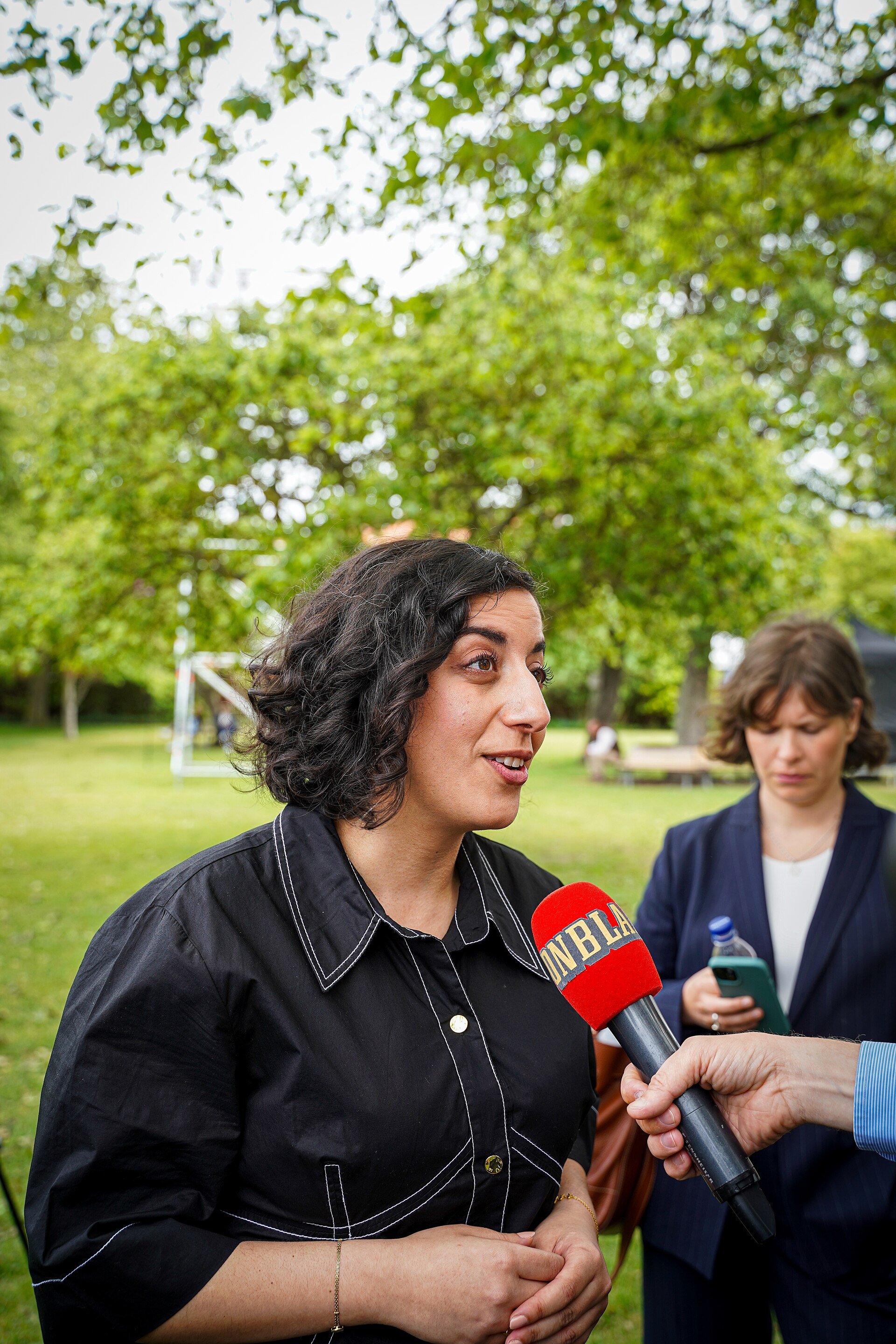
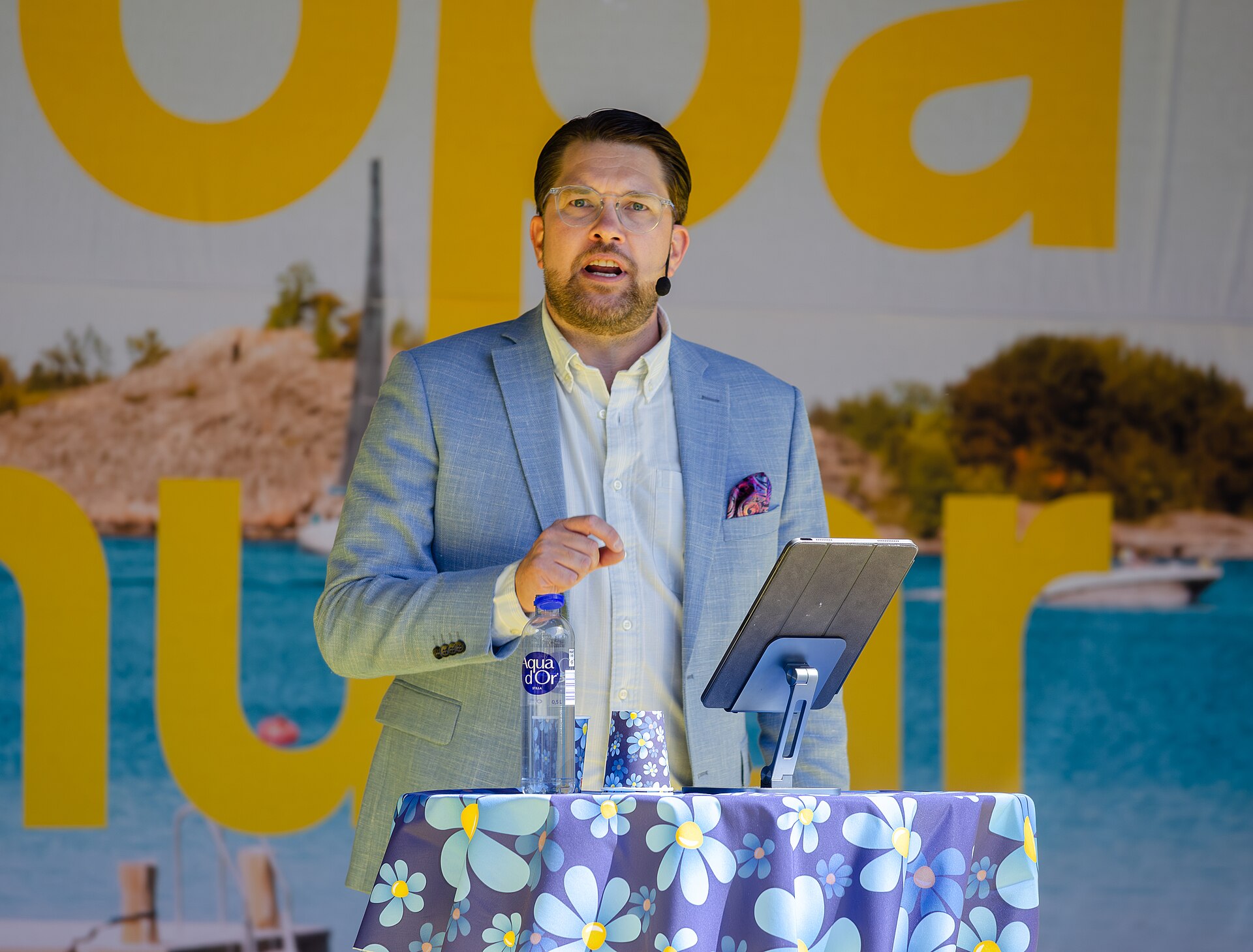
Daniel Helldén and Amanda Lind: A Green Revolution
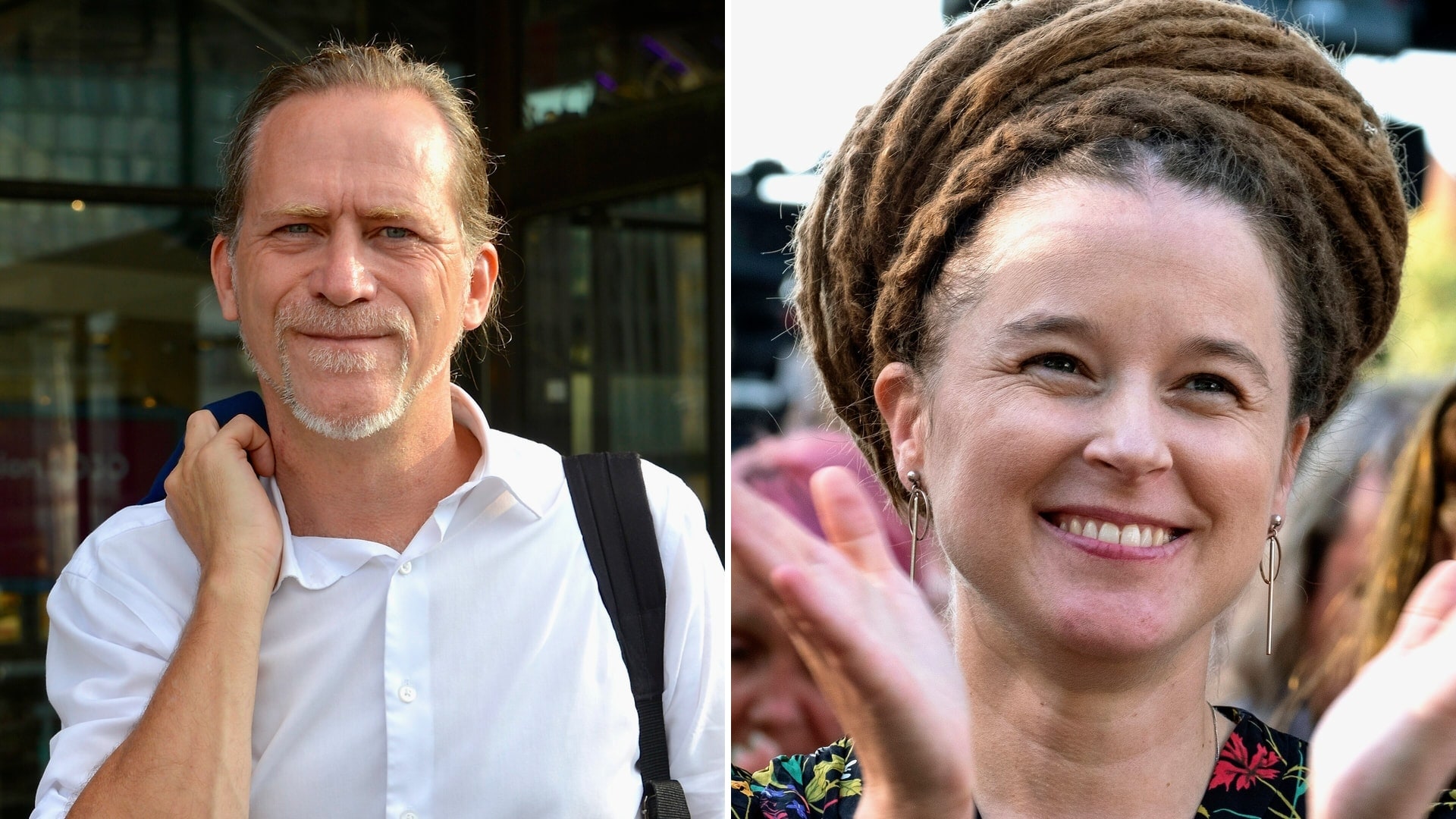
Two years ago, the Green Party looked like a movement Sweden might remember rather than re-elect. It had scraped back into parliament in 2022, spent the following year below the four per cent threshold in some polls and emerged bruised from internal leadership conflict. Today, it is polling at levels not seen for a decade. Daniel Helldén and Amanda Lind have turned survival into momentum.
The word revolution needs proportion. The Greens are not close to replacing the Social Democrats, and their two spokespersons remain less personally known than the leaders of the larger parties. But a party that won 5.1 per cent in 2022 reached 8.1 per cent in a May SvD/Demoskop poll, its best result in that series for nearly 12 years and higher than its celebrated 2010 election result. July's TV4/Novus barometer put it at 7.2 per cent. The danger zone has become a platform.
The revival began with two unlikely mandates. Helldén won the male spokesperson election in November 2023 by a single vote, 131 to 130. The former Stockholm transport commissioner was associated with cycle lanes, congestion, urban climate policy and a willingness to make motorists angry. His victory exposed a divided party and gave him what one political scientist called about as weak a starting mandate as a new leader could have.
Lind arrived five months later after Märta Stenevi resigned. A trained psychologist and former municipal politician in Härnösand, Lind had served as party secretary and as culture and democracy minister from 2019 to 2021. She brought national experience, a calmer public manner and an ability to connect climate policy with culture, welfare and everyday life. Party members elected her in April 2024 after an open contest.
Their complementarity now looks obvious. Helldén is the policy mechanic, impatient with fossil dependence and comfortable making a specific demand. Lind is the broader storyteller, presenting the transition as a question of fairness, hope and democratic confidence. Swedish media assessments of the 2026 campaign have repeatedly noted that Lind makes an impact in debates while Helldén gives the party definition.
Leadership alone did not produce the green wave. The current government supplied the weather.
Sweden's independent Climate Policy Council reported in March that policy during the parliamentary term had been insufficient and had worsened the prospects of reaching national climate targets. According to the council's 2026 assessment, emissions during the term moved in the wrong direction for the first time since the 1990s. The OECD had already warned that the government's policy course made the 2030 targets highly unlikely to be met.
The causes are concrete. The Tidö parties cut fuel taxes, sharply lowered the biofuel blending requirement, abolished aviation tax and reduced support for some green investment while betting heavily on future nuclear power and European emissions trading. The government argues that climate policy must be economically efficient, protect households and industry, and avoid symbolic measures that export emissions. It has defended the EU emissions trading system and promotes Swedish clean industry. Those are serious arguments. They do not erase the rise in domestic emissions or the widening gap to legislated goals.
For the Greens, the reversal restored political purpose. Climate and environment have risen on voters' list of important issues. Energy insecurity and oil-price shocks made fossil dependence a household problem rather than an abstract carbon calculation. Helldén and Lind could connect the government's petrol relief to a larger vulnerability: a country tied to imported fossil fuels remains exposed to wars and price spikes.
They have also worked to change the distributional image of green politics. Lind argues that everyone should be able to afford an electric car while billionaires should contribute more, and has proposed banning private jets if possible. The party's 2026 programme combines emissions cuts with welfare, cheaper public transport, home renovation and a transition presented as fair across incomes and geography. The promise is that climate action can reduce household insecurity rather than demand private sacrifice from people with the least room.
That promise still carries difficult trade-offs. Higher fossil prices can hit rural households before alternatives exist. Rapid infrastructure and industrial expansion can conflict with local nature protection. The Greens oppose new nuclear reactors, and Helldén has said the party cannot sit in a government that builds them. That red line collides with Social Democratic support for nuclear energy and could complicate the government change the party wants.
The duo's popularity is uneven too. Demoskop's July confidence measure put Lind at 26 per cent and Helldén at 18. Lind's greater reach may reinforce old questions about whether a two-spokesperson model diffuses accountability. Yet the model is also part of the party's identity, and this pair has found a workable division rather than staging a permanent internal contest.
Their strongest counterargument is that much of the surge may belong to circumstance. A hostile government makes an opposition environmental party relevant. If Tidö changed course, or if an economic shock pushed climate down the agenda, some support could disappear. Polls measure a moment, not a durable realignment.
Still, political leadership is partly the ability to recognise a moment and give it language. Helldén and Lind inherited a party associated with government compromises, internal stress and electoral fear. They have made it look confident enough to set conditions for the next government. The shift from begging tactical voters for survival to demanding that the Social Democrats move on climate is itself a revolution in posture.
The election will decide whether it becomes a revolution in power. If the opposition wins, the Greens will have to convert moral clarity into coalition compromises without repeating the losses of their previous years in government. If the right remains, they will become the clearest parliamentary counterforce to four more years of Tidö climate policy.
Either way, the green revival rests on a truth larger than two personalities. When a government moves away from climate targets, it creates political space for leaders willing to move back towards them. Helldén and Lind did not invent the climate crisis or the government's retreat. They made sure the Green Party was ready when both became impossible to ignore.

DailySweden
DailySweden's desk of editors, reporters, researchers and investigative journalists. We bring readers factual, truthful and objective reporting on the issues that matter to them.
Contact the editorial desk ›