Simona Mohamsson: Crash Landing
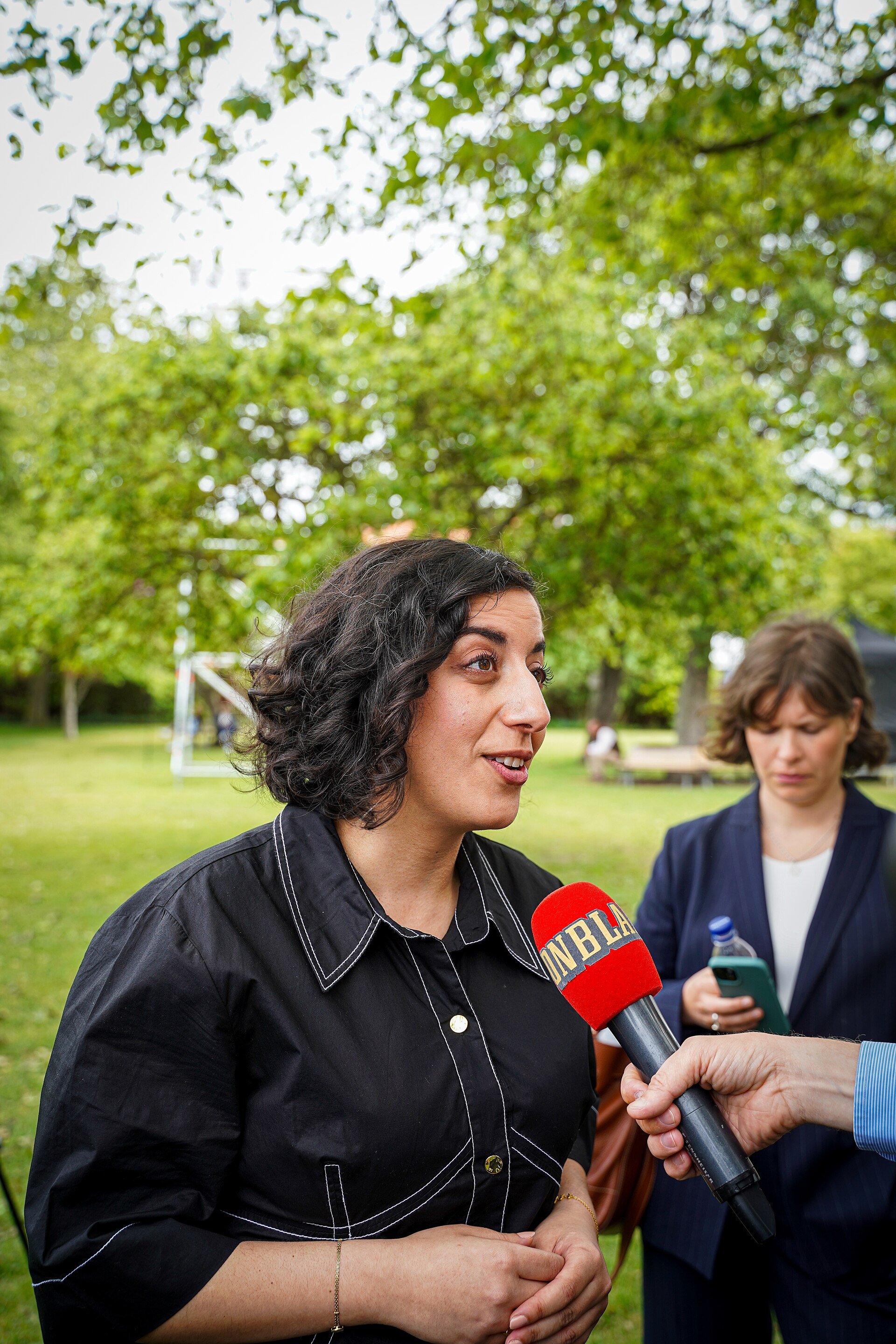
Simona Mohamsson became leader of the Liberals because the better-known candidates would not. A year later, one of Sweden's historic liberal parties is polling at 1.8 per cent, its lowest result in TV4/Novus history, and asking voters to believe that the person presiding over the crash can still land the plane.
The metaphor is harsh because the inheritance was already terrible. Mohamsson did not take over a healthy party and wreck it. The Liberals had spent years trapped around or below Sweden's four per cent parliamentary threshold. Their identity had been pulled apart by the decision to support a Social Democratic government after 2018, then by the opposite decision to join Ulf Kristersson's Tidö project with the Sweden Democrats after 2022. Johan Pehrson resigned in 2025 with the party still sinking.
Several prominent possible successors, including climate minister Romina Pourmokhtari, declined to run. Mohamsson, then the 30-year-old party secretary, was the only nominee at the extraordinary party meeting in June 2025. The job no one wanted had found the candidate willing to raise her hand.
Her life should have supplied a compelling liberal story. Born in Hamburg in 1994, she moved to Sweden as a child with her family and grew up in Gothenburg. Her father changed the family surname from Mohammed to Mohamsson, a choice she describes as part of becoming Swedish. She joined the Liberals as a teenager, studied public administration and rose through the youth wing and municipal politics. She has written about Hong Kong's democracy movement and says she entered politics to resist the Sweden Democrats.
That biography made her subsequent reversal more explosive. In October 2025, Mohamsson said she would vote against Kristersson as prime minister if the Sweden Democrats entered his government. The Liberals' party conference confirmed the same red line in November. On 13 March 2026, she appeared beside Jimmie Åkesson and removed it.
Mohamsson said the Sweden Democrats had changed and had demonstrated constructive cooperation. Five months earlier, she had argued the opposite. The agreement was prepared by a small group and approved by the Liberal board by 13 votes to eight. Senior Liberals threatened to leave. Youth leader Anton Holmlund said his confidence in her was exhausted. At an emergency digital congress nine days later, Mohamsson made the issue a vote on her leadership. Only 95 of 183 delegates voted to re-elect her. Eighty abstained and eight did not participate.
That is a mandate in the technical sense. It is not a display of unity.
For a brief moment, the gamble appeared to work. A March Demoskop poll put the Liberals at 4.5 per cent, and trust in Mohamsson rose among Tidö voters. The movement did not hold. Statistics Sweden measured the party at 2.5 per cent in May. Other polls fell lower. The July TV4/Novus barometer now places it at 1.8 per cent, down 0.4 points in a month, while every other Tidö party gained. The result suggests that voters can see what the Moderates, Christian Democrats and Sweden Democrats contribute to a right-wing government but struggle to identify the Liberal necessity.
Mohamsson has tried to answer with a blizzard of positions. She has emphasised schools, smaller classes, integration through work and a ban on profit-seeking limited companies in education. In Almedalen, she appealed to Centre and Moderate voters for tactical support, promising to block a government containing Nooshi Dadgostar. Her pitch was explicit: choose size L instead of M.
The problem is that tactical voting requires trust. In a spring Ipsos survey, only two per cent said they were certain they could vote tactically for the Liberals, while 61 per cent ruled it out. Mohamsson's public authority has also suffered from avoidable distractions, including scrutiny of a claimed master's degree that she had not completed and municipal compensation she later repaid for a period when she was working in Jordan.
None of these episodes alone explains the Liberal collapse. Small parties are punished when their larger allies occupy the same territory. The Liberals have spent two electoral cycles trying to be the conscience of arrangements they also keep alive. They claim victories on schools, Europe and civil rights while supporting a government whose migration programme many traditional liberal voters reject. Mohamsson inherited that contradiction. Her failure has been to make it sharper.
The SD reversal was meant to remove uncertainty about the right's governing alternative. It instead raised a more damaging question about the value of Liberal promises. If a red line approved in November can disappear in March, what exactly is a voter endorsing in September? Mohamsson's defence is that politics should be judged by the policy a party wins, not by ritual distance from another party. That is a coherent argument. It is also almost identical to the justification with which the Liberals entered Tidö and began losing voters.
There is courage in accepting an impossible job and refusing to surrender. Mohamsson is younger than every rival leader, carries the expectations placed on a politician with an immigrant background and is fighting structural decline she did not create. A fair profile must allow that she could still recover, as the Liberals did with tactical votes in 2022.
But resilience is not the same as direction. Her first year has brought a reversal on the defining question of the party's identity, a congress split down the middle, damaging questions about judgment and a new polling floor. The latest Demoskop confidence measure gives her 14 per cent, the lowest of the parliamentary party leaders.
The Liberals now face an existential election with a leader who was chosen because others stepped away. Mohamsson wanted to prove that she could take the controls. Unless voters see a reason for the party to exist beyond keeping one bloc in power, her bravery may be remembered less as a rescue attempt than as the decision to be in the cockpit when the ground arrived.

DailySweden
DailySweden's desk of editors, reporters, researchers and investigative journalists. We bring readers factual, truthful and objective reporting on the issues that matter to them.
Contact the editorial desk ›