Jimmie Åkesson: From Pariah to Power Broker
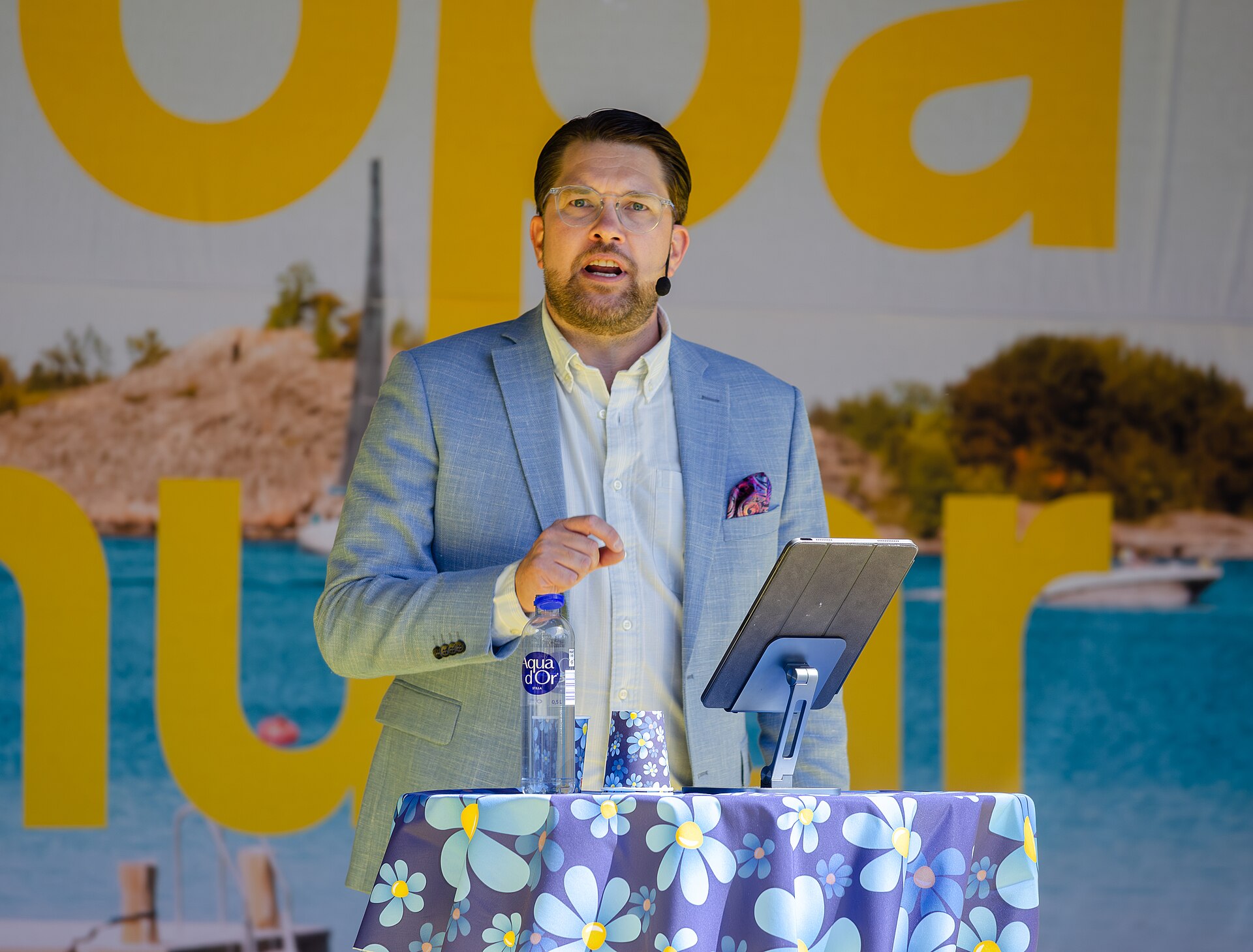
Jimmie Åkesson does not sit in Sweden's cabinet. He has never been a minister. Yet few politicians have shaped the government that took office in 2022 more decisively. The Sweden Democrats' leader helped write the agreement that made Ulf Kristersson prime minister, placed party staff inside the Government Offices and turned demands once confined to Sweden's nationalist fringe into the programme of the right.
That achievement is more striking because exclusion was once the organising principle of Åkesson's political life. When he became leader in 2005, aged 25, the Sweden Democrats were a marginal party with an extremist history and no seats in parliament. The other parties did not merely oppose it. They treated cooperation as disqualifying.
The history was not an invention of hostile journalists. A white paper commissioned by the Sweden Democrats and written by historian Tony Gustafsson documented the party's links to fascist, antisemitic and neo-Nazi milieus at its foundation in 1988. Under Åkesson, the party changed its symbol, moderated parts of its presentation and expelled openly racist representatives. It also kept immigration and national identity at the centre of its appeal. The clean-up was both ideological management and a strategy for power.
The election results trace the strategy's success. The Sweden Democrats won 2.9 per cent in 2006, entered parliament with 5.7 per cent in 2010, reached 12.9 per cent in 2014 and 17.5 per cent in 2018. In 2022, they took 20.5 per cent and became Sweden's second-largest party. For the first time, they were also the largest party on the right.
Åkesson's personal endurance has been central. The core group around him began organising in southern Sweden in the 1990s and spent years professionalising a party full of local scandals and ideological freelancing. The pressure exacted a price. In 2014, he went on sick leave for exhaustion and was absent for months. He returned to a movement that had grown beyond protest and now required the discipline of a national institution.
The old cordon did not collapse in one move. It eroded as the Sweden Democrats grew and the centre-right fragmented. Ebba Busch's Christian Democrats opened talks with Åkesson in 2019. Kristersson's Moderates followed. After the 2022 election, the Moderates, Christian Democrats and Liberals needed the Sweden Democrats' seats to govern. The Tidö Agreement gave Åkesson leverage without cabinet responsibility.
Its imprint is visible in the government's restrictive migration programme, criminal justice expansion, welfare qualification proposals and emphasis on return and removal. Coalition partners secured their own priorities, including tax cuts and nuclear investment, but Åkesson changed the boundaries of what the right would sign. The government's own May 2026 account of the Tidö term presents the Sweden Democrats not as an occasional support party but as one of four partners delivering a joint programme.
Power without office offered Åkesson a valuable arrangement. He could claim results when the agreement pleased his voters and retain some distance from ministers when government failed. It also created frustration inside a party that had more votes than every governing party. Why should the largest force on the right remain outside the room where portfolios are assigned?
That final barrier has now fallen in principle. On 1 April 2026, Kristersson said the Sweden Democrats could enter a four-party government with ministerial posts after the election. Åkesson, in return, backed Kristersson as the right's candidate for prime minister. The symbolism was extraordinary. A Moderate prime minister was publicly negotiating the terms of cabinet entry with the leader of the party Sweden's establishment once refused to acknowledge.
The bargain also reveals who has leverage. In July's TV4/Novus barometer, the Sweden Democrats stood at 20.4 per cent, compared with 17.3 for the Moderates, 6.1 for the Christian Democrats and a disastrous 1.8 for the Liberals. If those numbers resembled the election result, the right could not plausibly treat Åkesson as a junior guest. He would have the largest parliamentary force in the bloc and a strong claim to major ministries.
That does not make him omnipotent. The right trails the opposition in current polling. A majority of parliament may still refuse to make Åkesson prime minister, which helps explain his support for Kristersson. His party's attempts at normalisation have also been repeatedly damaged by racist statements, anonymous influence operations and internal misconduct. Åkesson has built a tightly controlled organisation, but the need for repeated expulsions shows that control has never been complete.
Nor has pariah status vanished from the electorate. The latest Demoskop measure put confidence in Åkesson at 38 per cent, a formidable level for a leader of his politics but far from broad consent. The argument over whether the Sweden Democrats have truly changed, or merely learned the language required to exercise power, remains fundamental.
For immigrants and foreign-born Swedes, that question is not abstract. Åkesson's rise has shifted policy towards fewer routes into Sweden, weaker permanence for some residents, harder conditions for citizenship and a politics that often treats migration as the explanation for failures in crime, welfare and cohesion. Supporters see long-delayed control and the defence of a common nation. Those targeted by the programme experience the state becoming more conditional and suspicious.
Åkesson's greatest victory may therefore be larger than any election percentage. He has made other parties speak on his terrain. Rivals who once promised never to depend on him now compete to prove that they can be as tough on migration and crime. Even a future centre-left government would inherit a debate he helped reconstruct.
The outcast has become the right's power broker because he understood a brutal rule of parliamentary politics: a party that cannot be bypassed does not need to be loved. This September will decide whether that leverage finally carries him into government. Whatever the result, Swedish politics already bears his design.

DailySweden
DailySweden's desk of editors, reporters, researchers and investigative journalists. We bring readers factual, truthful and objective reporting on the issues that matter to them.
Contact the editorial desk ›