Ebba Busch: Pragmatist?
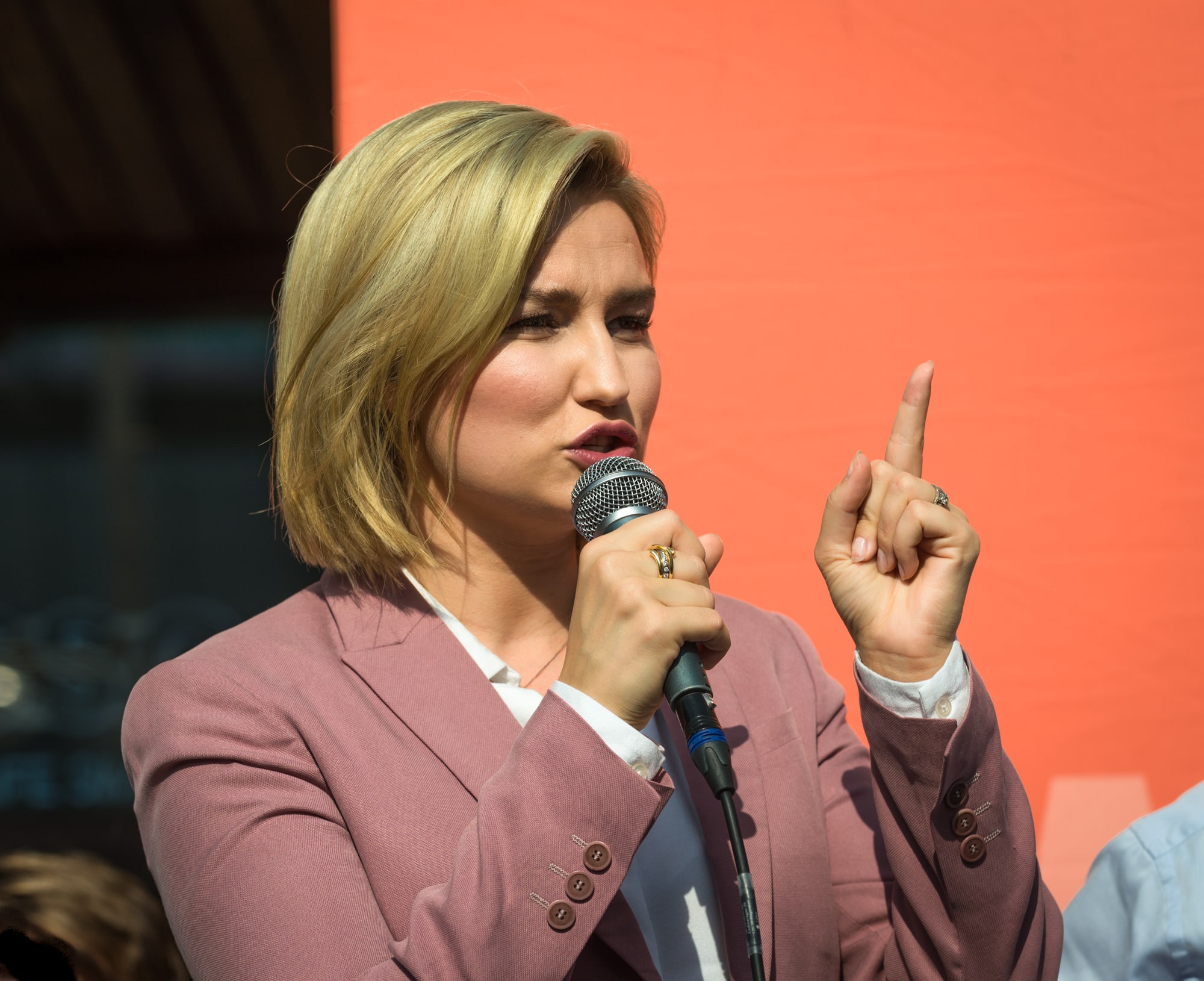
Ebba Busch was pragmatic about the Sweden Democrats before pragmatism became the governing philosophy of the Swedish right. Now, with the Tidö parties trailing before the election, she may be flirting with pragmatism about working with the Social Democrats too. Her critics call it opportunism. Busch calls it getting her politics done.
The distinction has defined her leadership of the Christian Democrats. When she took over in 2015, aged 28, the party was old, anxious and accustomed to living near the four per cent parliamentary threshold. It fell as low as 2.9 per cent in a major poll before the 2018 election. Busch sharpened its language on healthcare, crime, migration and family policy, made herself impossible to ignore and led the party to 6.3 per cent. Survival became part of her brand.
She had learned politics in Uppsala, where she served as a municipal councillor before entering parliament. Her national style mixed Christian Democratic welfare themes with the pace and confrontation of modern campaigning. She could talk about elderly care, nuclear reactors and cultural conflict with the same television-ready certainty. The party became more personal, and its leader became far more popular than its size would predict.
Busch made her most consequential move in 2019. She declared that the Christian Democrats should talk and negotiate with every parliamentary party, then invited Jimmie Åkesson to a much discussed meatball lunch. At the time, the Sweden Democrats remained beyond the boundary of acceptable coalition politics for much of the centre-right. Busch crossed first. Ulf Kristersson followed, and the route to the 2022 Tidö Agreement opened.
This was not moderation. The Sweden Democrats had not abandoned their restrictive nationalism, and Busch did not pretend that they had become Christian Democrats. It was a calculation that the old centre-right Alliance could no longer win and that refusing contact gave a growing party power without responsibility. The calculation worked. In 2022, the four Tidö parties won a one-seat majority. Busch became deputy prime minister and minister for energy, business and industry.
Government has tested the difference between winning attention and delivering systems. Busch promised a rapid expansion of nuclear power and attacked the previous government's energy policy. New reactors, however, require immense capital, state risk-sharing and confidence that policy will survive several elections. That is why she sought a cross-party energy agreement with Magdalena Andersson's Social Democrats. When talks failed, Busch blamed the Moderates and Sweden Democrats for making nuclear investment more expensive by preferring political conflict.
The episode reveals her pragmatism at its strongest. Energy infrastructure outlives governments. Investors need a settlement wider than a one-seat bloc. Working with the opposition is not ideological betrayal when the objective requires durability.
It also gave Busch a view of the exits. In late 2025 and again this year, she has spoken warmly about cooperation with the Social Democrats on energy and a possible state takeover of healthcare. She has said Sweden will need cross-party agreements and met Andersson privately. In Almedalen, her staff posted images of the two leaders eating ice cream, feeding speculation that the Christian Democrats were preparing for a different parliamentary landscape.
Busch denies that she is auditioning for a red-green government. Her declared option remains four more years of Tidö. Kristersson says she will not join an Andersson cabinet. The simpler interpretation is that she wants freedom to deal across the bloc line on issues central to her party while reminding larger partners that the Christian Democrats cannot be taken for granted.
That reminder matters because Busch again has an electoral asset the party needs. In the latest Demoskop confidence measure, 41 per cent of voters expressed fairly or very high confidence in her. Only Andersson ranked higher. The Christian Democrats received 6.1 per cent in July's TV4/Novus poll, up half a point, even as the larger governing party remained under pressure. Busch is a small-party leader with a major-party personal rating.
Her flexibility has limits, and not always liberal ones. Busch helped normalise a party with far-right roots and supports one of modern Sweden's most restrictive migration programmes. She has used hard cultural language, backed tougher criminal policy and remains firmly committed to the right on taxes and ownership. A willingness to cooperate with Social Democrats on reactors or healthcare does not turn her into a centrist.
Nor is every pivot proof of statecraft. Political survival often explains the same behaviour. The Christian Democrats' signature demand for nationalising healthcare has struggled to win support from the other parties. Presenting it as a bridge to Andersson gives Busch ownership of an issue and distance from a government blamed for hospital pressure. Praising Social Democratic responsibility also broadens her appeal if Tidö loses.
But opportunism is not the opposite of pragmatism. Democratic politics requires politicians to pursue power, because policy without power is a pamphlet. The question is whether the movement serves a consistent end. Busch can point to one: a stronger national state that guarantees healthcare, secures energy supply, supports families and enforces conservative ideas of order. Her choice of partner changes more readily than that objective.
She has now spent more than a decade proving that the Christian Democrats will not disappear while she has room to manoeuvre. First she broke the taboo around Åkesson and helped build the current government. Then she challenged partners who would not lock in its energy project. Now she is making sure Andersson's telephone number remains available.
Swedish voters may see calculation in every gesture, and they would be right. They may also ask whether calculation is preferable to the red lines and ultimatums paralysing other parties. Busch's wager is that voters do not reward purity when hospitals need staff and power stations need financing. She goes where influence can be found. The remarkable part is how often the rest of Swedish politics eventually follows.

DailySweden
DailySweden's desk of editors, reporters, researchers and investigative journalists. We bring readers factual, truthful and objective reporting on the issues that matter to them.
Contact the editorial desk ›