Why wealthy interests work so hard to make everyone hate taxes
The point of a civilised tax system is that your circumstances should not decide whether you live, learn or move freely. If your heart stops, the ambulance and operation should not depend on your parents’ wealth. Your child should have an excellent school even if you cannot buy a postcode. The safest roads, cleanest water and best public transport should belong to everyone using them, not only to people who can afford a private alternative.
In Sweden in 2024, income from capital and capital gains reached SEK 523.6 billion. The tenth of people with the largest capital incomes received 90 percent of that sum, roughly SEK 471 billion. Not all of this was literally passive: the measure includes interest, dividends, rental income and net gains. But the contrast remains brutal. People who own enough can watch money create money while millions must sell another hour of their lives.
That is why the politics of tax matters so much to concentrated wealth. Tax does more than collect revenue. It turns a portion of private purchasing power into public capacity. It says that a billionaire’s freedom to keep every additional krona is less important than a child’s freedom to learn, a patient’s freedom to survive or a worker’s freedom to reach a job on a reliable train.
Sweden can see the machinery of persuasion in plain sight. Timbro says its mission is to shape long-term opinion for markets and free enterprise. Its annual budget is about SEK 30 million, funded entirely by Stiftelsen Fritt Näringsliv, which Timbro says is financed by Svenskt Näringsliv. Timbro also says individual choice matters more than economic equality and that political power over people and businesses should shrink.
This is legal advocacy in an open democracy, not a secret plot. But we should be honest about what organised business interests are buying: staff, reports, events and years of repetition intended to make a political worldview feel like common sense. In Timbro’s proposed tax reform, capital-income tax would fall to 15 percent, corporate tax would be halved and state income tax would disappear.
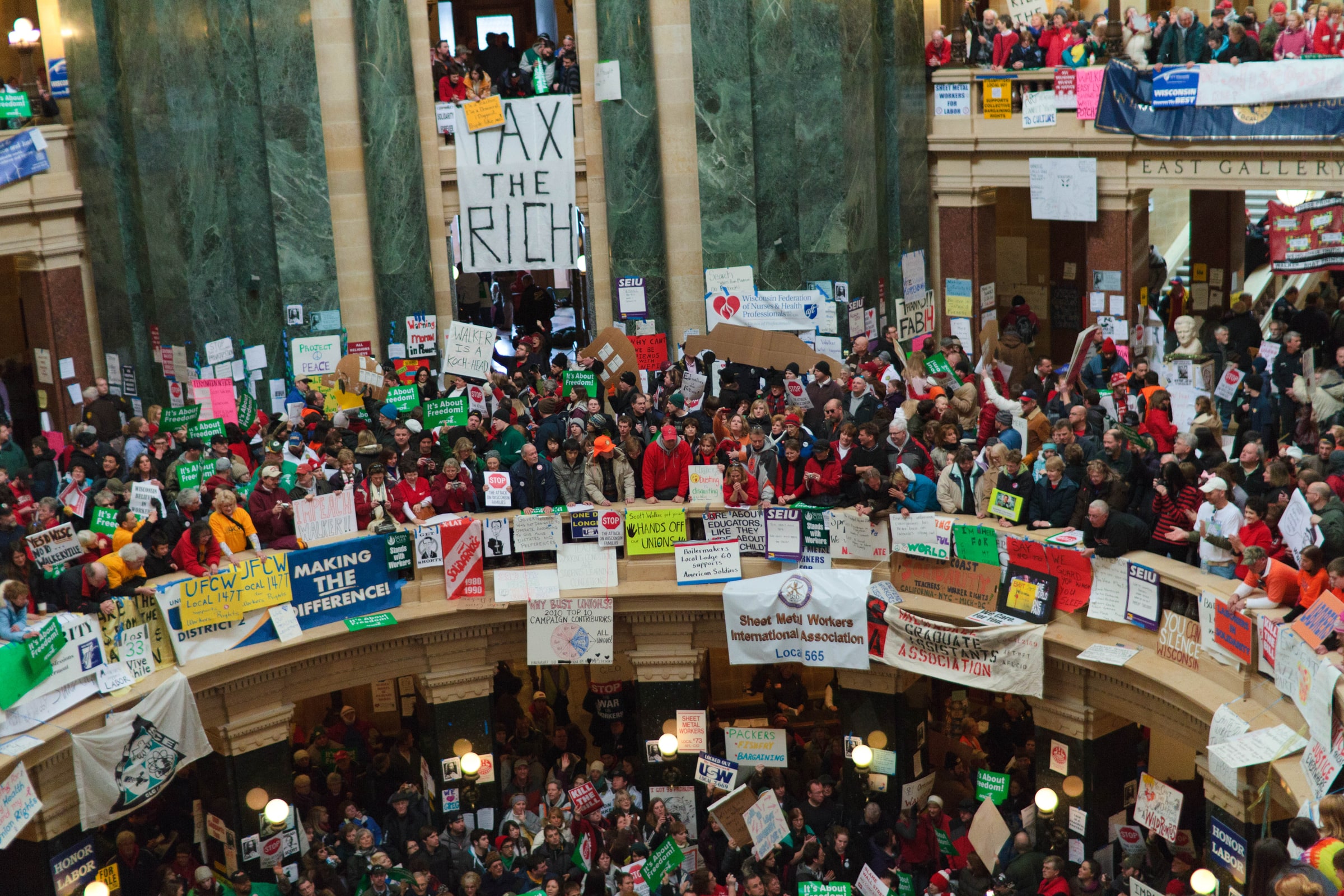
The beneficiaries do not need to persuade us that they enjoy lower taxes. They need to persuade everyone else that tax itself is the enemy. That argument works best when each deduction on a payslip is made painfully visible while the ambulance, classroom, drinking water, railway and social insurance funded collectively fade into the background. The fight over tax has filled parliaments and public squares because it is ultimately a fight over power.
Taxes can be badly designed. Governments waste money. High or clumsy taxes can discourage work, investment or enterprise, and ordinary earners have every right to demand value for what they pay. No serious defence of taxation should excuse inefficiency or pretend that every public decision is wise. But waste is an argument for competent government and fairer taxes, not for abandoning the shared systems on which people without private fortunes depend most.
A civilised country does not promise that everyone will have the same life. It promises that wealth will not decide who receives the best chance to live one. The next time someone tells you that tax is simply money taken from you, ask what disappears from the sentence: the life saved, the child taught, the bridge maintained and the freedom that becomes real only when it belongs to everyone.

DailySweden
DailySweden's desk of editors, reporters, researchers and investigative journalists. We bring readers factual, truthful and objective reporting on the issues that matter to them.
Contact the editorial desk ›