Sign inSubscribe
DailySweden Jobs

Find your next Englishspeaking job in Sweden

Explore opportunities across Sweden. Your next move starts here.

Explore DailySweden Jobs

Features · Making It · Published 12 August 2026

Most recognised foreign graduates still lacked matched work eight years later

DailySweden logo

DailySweden
Updated 15:15 · 2 min read

Listen to this articleNarrated - 9:12

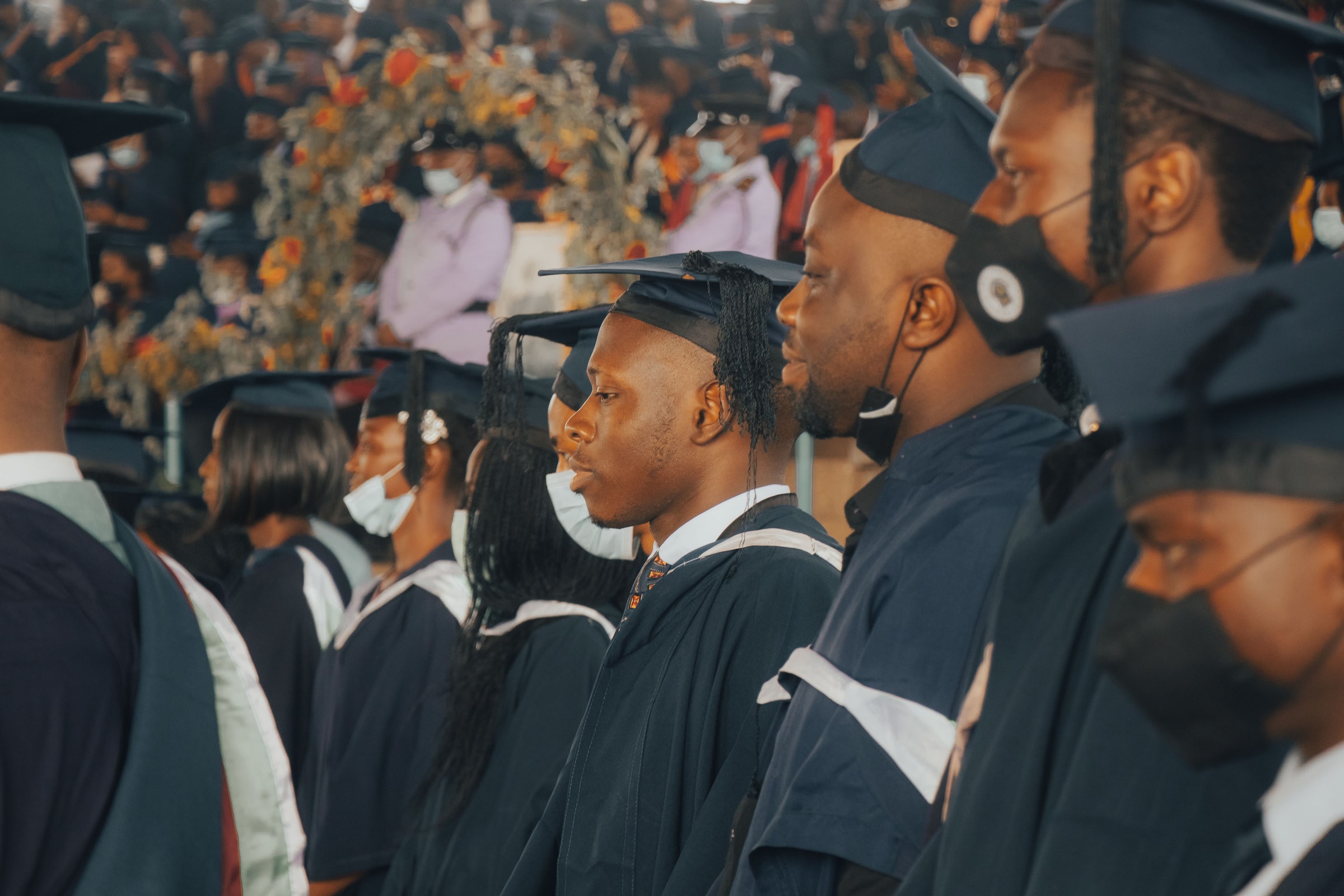
Graduates in black academic gowns and caps gather at a crowded ceremony in Nigeria.
Graduates in black academic gowns and caps gather at a crowded ceremony in Nigeria.. Image: Adedire Abiodun / Pexels

Sweden recognises thousands of foreign qualifications each year, but most foreign-educated graduates in UHR’s long-term study still lacked work matching their education level eight years after receiving an official assessment.

The country is not short of recognised expertise. In 2025, the Swedish Council for Higher Education, UHR, issued assessments for 16,599 foreign qualifications, according to its annual figures. That included 4,367 qualifications in science, technology, engineering and mathematics, 1,184 in healthcare and 1,152 teacher qualifications. India was among the five largest countries of education.

An assessment tells an employer which Swedish qualification the foreign education corresponds to. It is supposed to make skills legible in a labour market that may not recognise an overseas university or degree title. UHR describes the service as one tool for closing Sweden’s skills shortage.

The longer-term outcome is much less comfortable. UHR’s labour-market study followed more than 11,000 immigrants with foreign higher education. Eight years after an assessment, 44 percent of women and 35 percent of men had work matching their education level. Most in both groups still did not.

Recognition did help. Among comparable graduates who had not obtained an assessment, only 28 percent of women and 25 percent of men held work at the corresponding education level. The advantage was particularly large for women. That is a serious argument for expanding recognition, not dismissing it.

It is also evidence that recognition alone does not remove professional exclusion. A document can explain the level of a qualification, but it cannot make an employer offer work at that level. UHR’s statement is guidance for recruitment and further study, not a Swedish degree or an employment guarantee. Regulated professions also require separate authorisation from the responsible authority.

The scale of the new assessments makes that distinction consequential. Ukraine, India, Iran, Syria and Pakistan were the five largest countries of education in UHR’s 2025 figures. These are not marginal numbers or an abstract future talent pool. They represent people already asking Sweden to recognise skills the country says it needs.

The study has important limits. It examined people who received assessments mainly between 2007 and 2011, so its eight-year result does not describe the people whose qualifications were assessed in 2025. Matching was measured by education level rather than whether a person worked in the same subject they studied. The comparison also cannot assign every employment difference to the UHR document itself.

Those limits do not erase the pattern. They define what Sweden should measure now. The government and UHR can count how many assessments are issued, which fields they cover and how quickly they are processed. Employers and public institutions should also be accountable for what happens next: whether engineers, teachers, health professionals and other graduates reach work that actually uses their training.

That requires outcome data for newer cohorts, broken down by profession and gender, as well as the production total. Without it, Sweden can celebrate faster recognition while leaving the longer and more important transition into qualified work largely invisible.

Sweden recognised 16,599 foreign qualifications last year while warning about shortages in many of the same fields. The older evidence says official recognition improves a graduate’s chances, but still leaves most without matched work years later. Counting recognised expertise is the beginning of integration into the labour market, not the result.

DailySweden logo

DailySweden

DailySweden's desk of editors, reporters, researchers and investigative journalists. We bring readers factual, truthful and objective reporting on the issues that matter to them.

Contact the editorial desk ›

Read next