SATURDAY 22 AUGUST· STOCKHOLM · THE DAY IN 5 STORIES

Women are 79% of Sweden’s stress-related sick-leave cases

Official data show stress leave remains overwhelmingly female, with heavier workloads and less control concentrated in education and care.
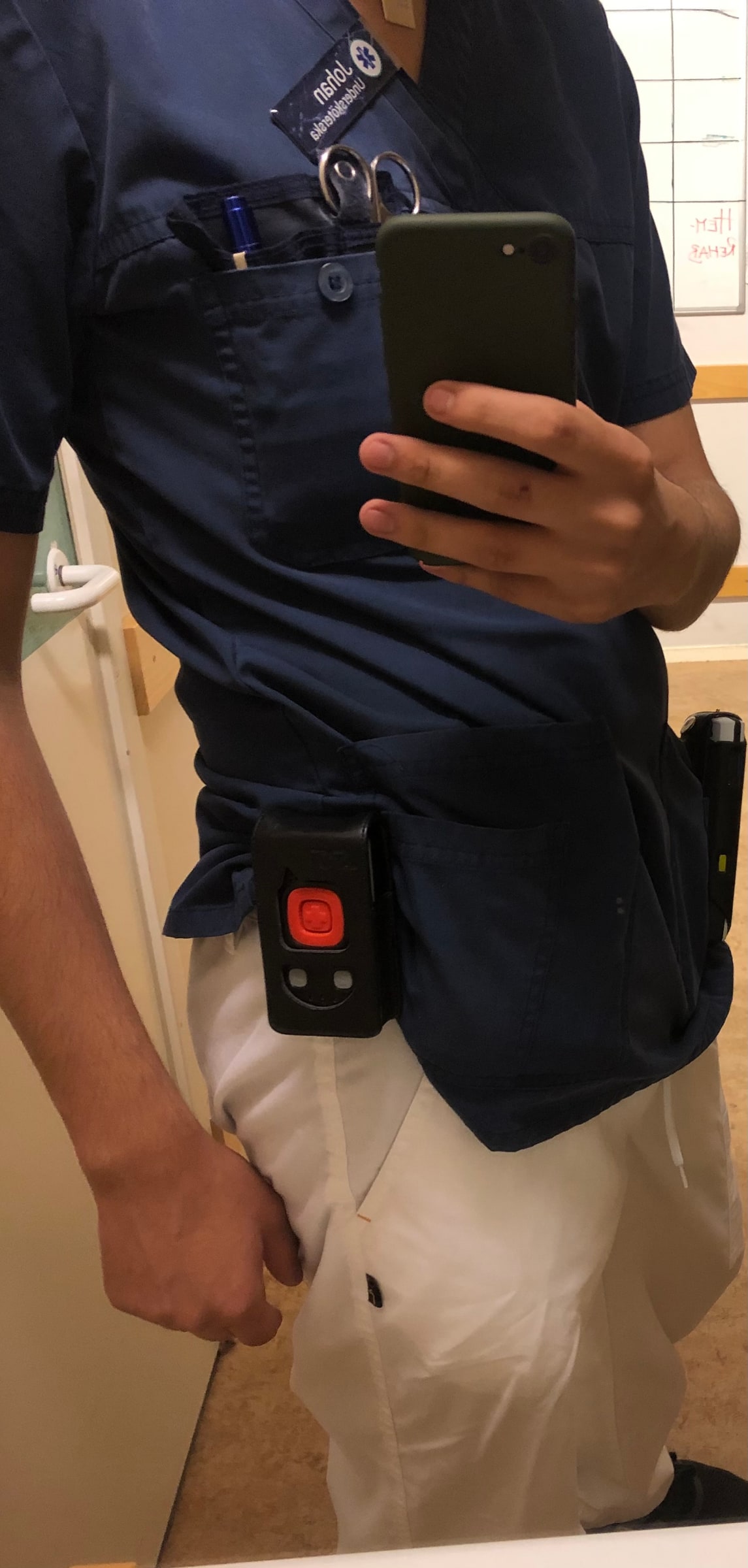
A care worker in Sweden wears a red-button assault alarm on the hip.
A care worker wears an assault alarm with GPS and phone functions in Sweden in September 2019. The archive photograph does not depict a person in the sick-leave statistics. Image: Johanchristell99 / Wikimedia Commons / CC BY-SA 4.0

Sweden’s stress-related sick-leave crisis is overwhelmingly female. Women made up 79% of cases, while official findings trace the risk to women-dominated workplaces where high demands meet low control over the workload.

Listen to this articleNarrated - 9:12

Women accounted for that share in September 2025, according to the 2026 assessment by Sweden’s Gender Equality Agency. Stress-linked sickness absence fell during 2025, especially among women, but cases among women were still 21% higher than in September 2019.

Women’s overall sickness absence is now almost twice men’s. The risk climbs sharply at ages 30–39, and the agency reports that women with small children have a 77% higher risk of a long sickness case than men with children of the same age.

The report ties the pattern to paid and unpaid work. Stress-related absence is higher in women-dominated sectors, where low control over workload often sits beside high demands for skill. Women also carry more unpaid care alongside their jobs.

A separate work survey of about 17,600 employed people found that women’s jobs generally bring heavier workloads, less influence and greater exposure to threats and violence. Those risks were most common in female-dominated education, healthcare and care work.

Men face severe workplace risks too, particularly heavy lifting and machinery. That does not weaken the gender finding: job segregation produces different hazards. The 79% figure describes who reached stress-related sick leave, not a diagnosis of why each individual became ill.

DailySweden logo

DailySweden

DailySweden's desk of editors, reporters, researchers and investigative journalists. We bring readers factual, truthful and objective reporting on the issues that matter to them.

Contact the editorial desk ›
All stories