
Why Gothenburg Book Fair is built around what readers miss
A reader entering Gothenburg Book Fair has a problem before buying a single book: several good things are happening at once. The map offers stages, halls and booths. The clock supplies the first hard edit.
This year's fair runs from 24 to 27 September at the Swedish Exhibition and Congress Centre. Its live programme stretches across four days and subjects from fiction and poetry to games, psychology and the environment. The point is abundance, but abundance changes the experience. Every choice also creates something missed.
The scale became clearer when the fair released its stage programme on 1 September. Organisers say 34 stages are planned, the exhibition hall is fully booked and the complete offer runs to several thousand events. A reader cannot conquer that list. The day has to become personal instead.
Fresh publisher schedules make the problem wonderfully concrete. Bazar's new programme moves from women writing through history to crime landscapes, finding a writing voice and launching a trilogy. Those are only one publisher's appearances. Elsewhere, Forskartorget says it will host more than 80 stage events with over 130 researchers and about 50 organisers.
That mix is why the fair can feel less like a shopping trip than a temporary city. Authors, publishers, librarians, teachers and readers share the same corridors, then split again towards different conversations.
The most useful plan is not the one with the most circles on it. It begins with one question: what do you want the day to feel like? A reader seeking surprise can leave room for a small stage. Someone travelling for one author can protect that hour and let the rest stay loose. The choice gives the missed events a shape rather than turning them into failure.
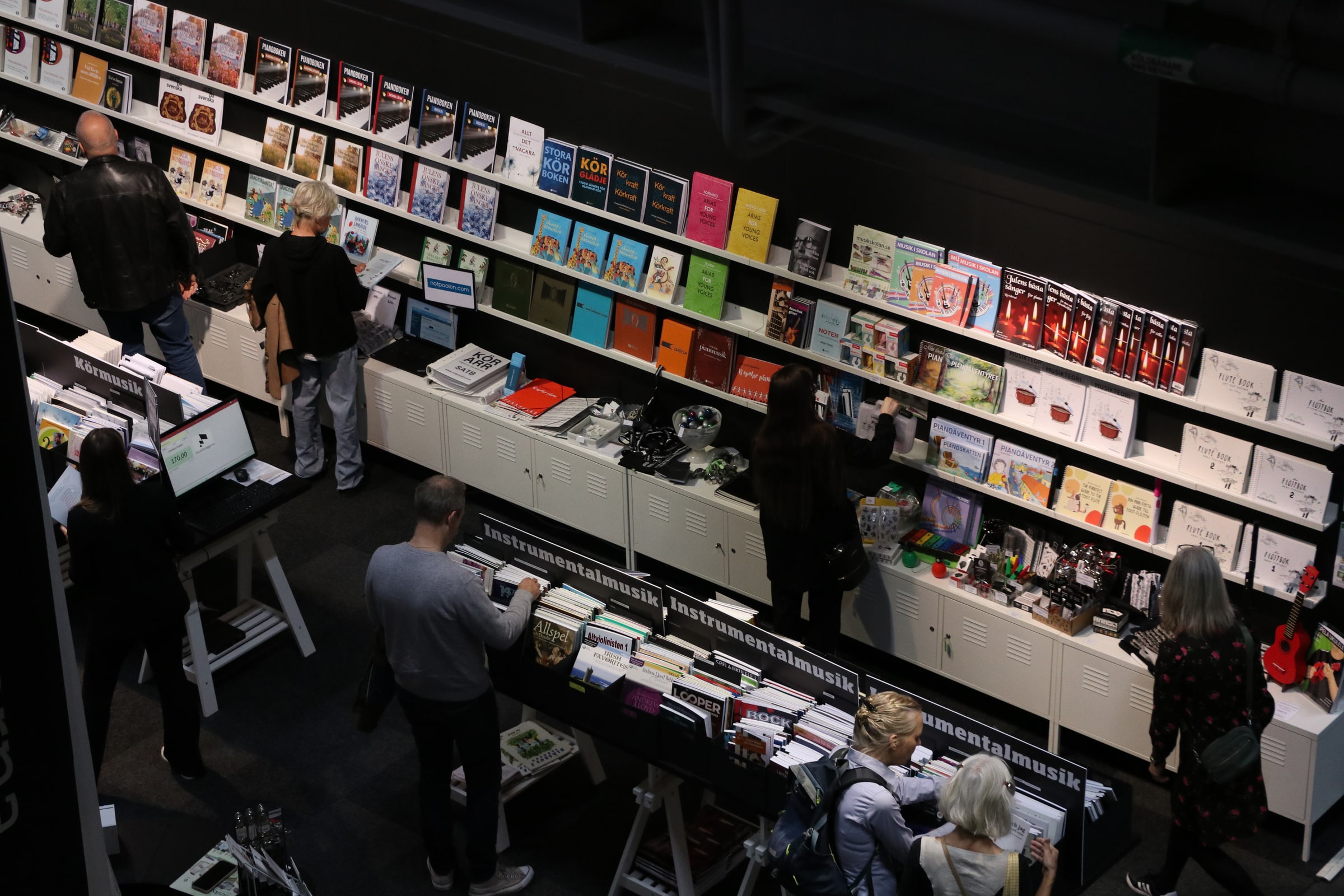
A photograph from the 2025 fair shows a booth from above, with books, signs and people competing for attention in the same frame. It is an archive image, not a promise of this year's exact layout. What it catches is the familiar pressure of the room: every direction appears to contain another possible day.
The ritual works because nobody gets the whole fair. Readers carry home one signed book, one overheard sentence or one conversation that changed the route. The rest remains on the programme, waiting to become somebody else's Gothenburg Book Fair.

DailySweden Lifestyle Desk
DailySweden Lifestyle Desk writes for DailySweden.
Contact the editorial desk ›