
What to do when a Swedish playground looks unsafe
A loose chain at a playground is a reason to stop the swing, not repair it yourself. The sensible Swedish response is practical: keep children away from the danger, find the owner and describe exactly what you saw.
Boverket's guidance says supervision normally starts by contacting the playground owner or whoever is responsible for it. On a municipal playground, that may be the parks or property service named on a sign. In a housing courtyard, it may be the landlord or housing association. A photograph of the equipment, the address and the time make the report easier to act on.
Describe the fault rather than your theory. A missing bolt, exposed sharp edge, broken board or trapped opening is useful information. Saying that the whole playground feels unsafe is harder to assess. Do not tape, tie or rebuild public equipment unless the responsible operator has asked you to do so.
If the risk appears immediate, move children away and call the number on site. For a serious hazard on municipal land, the municipality can route the report to the responsible service. Boverket also explains that the building committee has a supervisory role and should act quickly when a defect may endanger users.
Adult supervision still matters even on compliant equipment. Children use structures in ways designers did not predict, and wet surfaces, winter ice or discarded objects can change a familiar place. That does not transfer the owner's maintenance duty to parents. It simply separates everyday attention from technical responsibility.
When making a report, avoid photographing identifiable children. Frame the broken part, its relation to the equipment and a landmark that helps staff find it. Include measurements only when they can be taken without touching the hazard. If the playground has no sign, a municipal map or property register may identify the operator. A precise, privacy-conscious report is much easier to forward to the correct maintenance team.
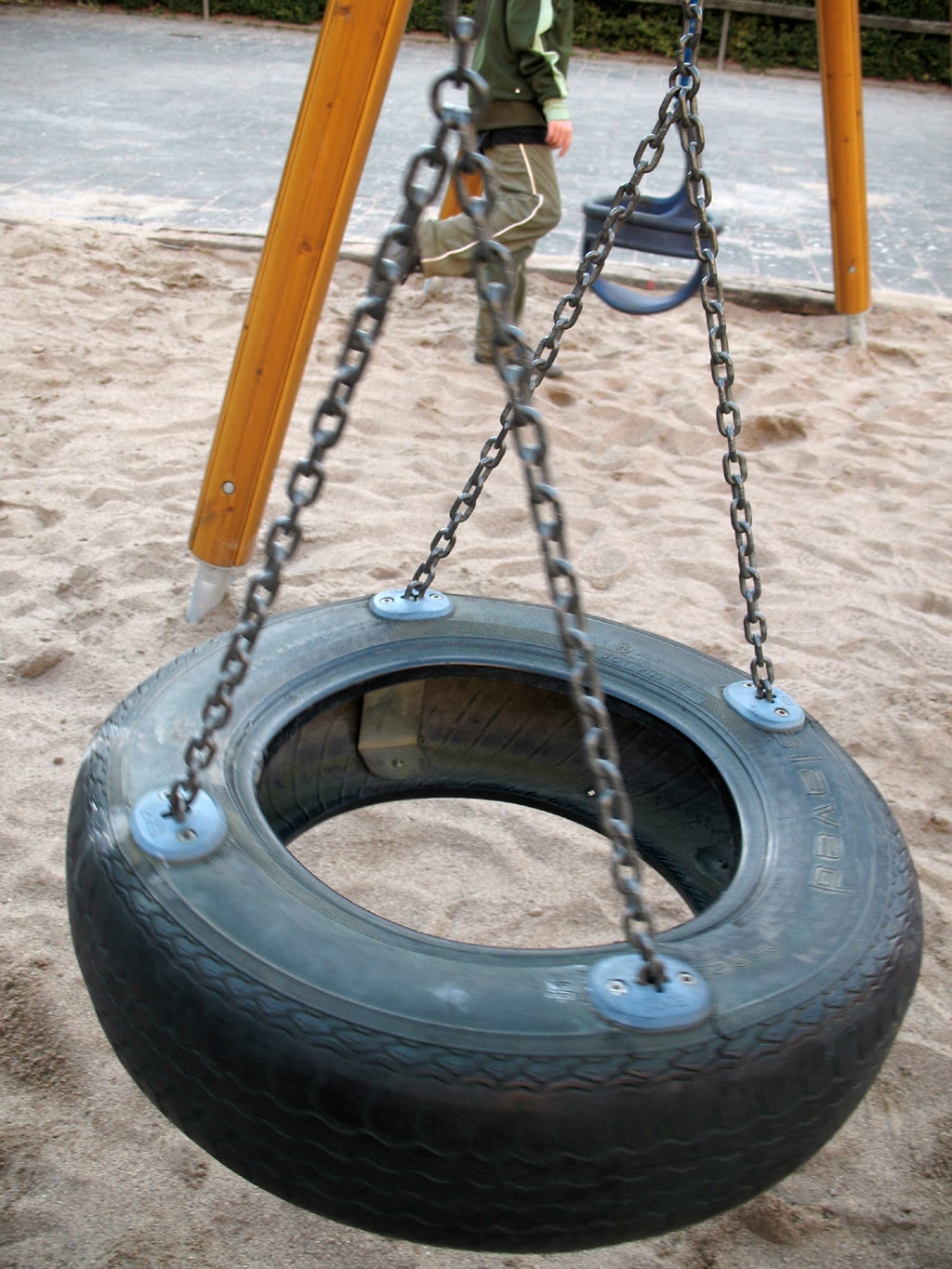
The selected photograph shows a tyre swing in Lund in 2007. It illustrates the kind of equipment a report might concern, but it does not depict a current defect. The useful rule is to protect the child, preserve the evidence and send the problem to the person who can lawfully fix it.

DailySweden Lifestyle Desk
DailySweden Lifestyle Desk writes for DailySweden.
Contact the editorial desk ›