Sign inSubscribe
DailySweden Jobs

Find your next Englishspeaking job in Sweden

Explore opportunities across Sweden. Your next move starts here.

Explore DailySweden Jobs

Features · Sweden Explained · Published 13 August 2026

School support for newcomers also lifted Swedish-born pupils

DailySweden logo

DailySweden
Updated 15:28 · 2 min read

Listen to this articleNarrated - 9:12

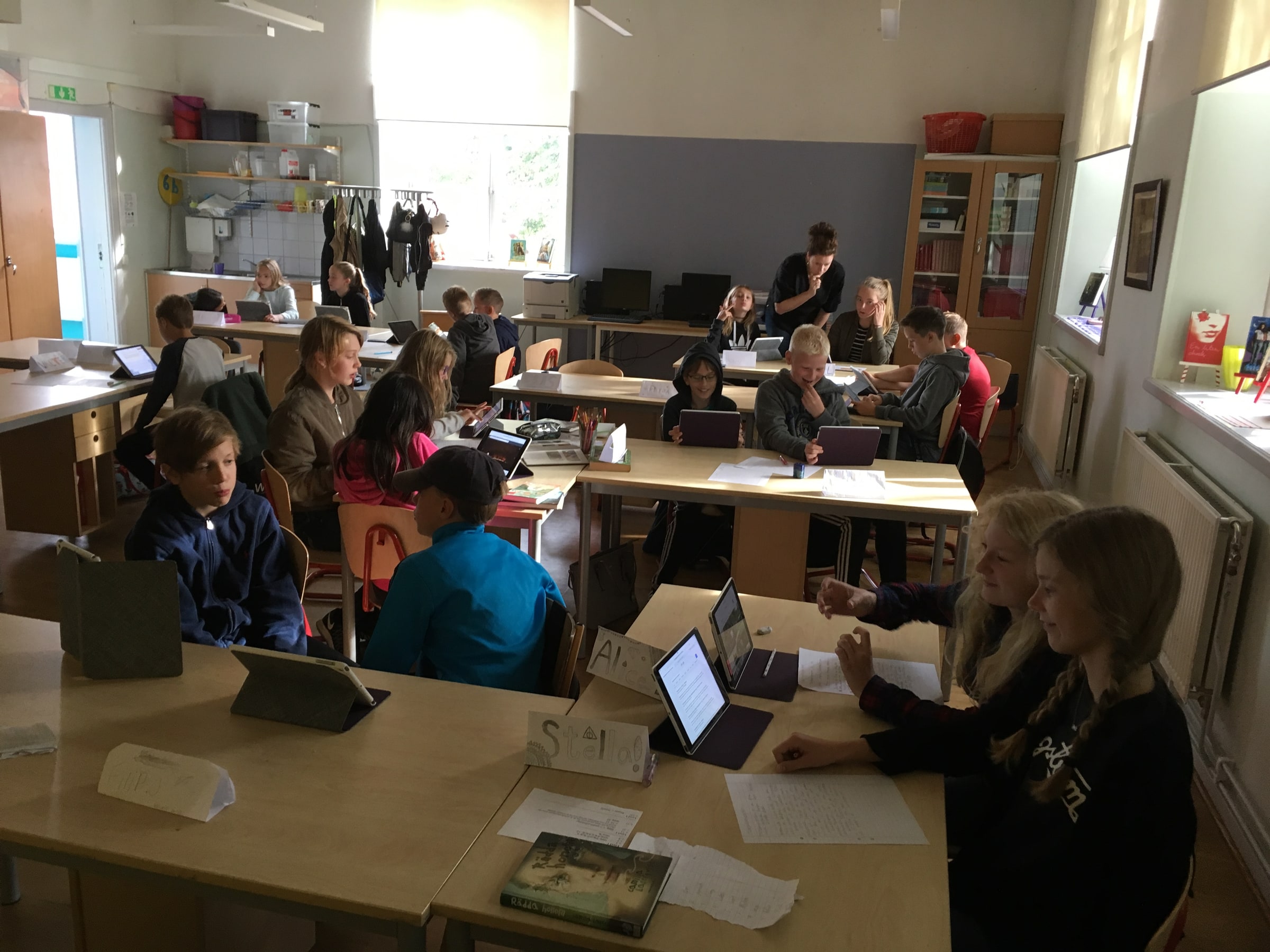
Pupils work at tables while a teacher helps a group in a classroom at Enskede school in Stockholm.
Pupils work at tables while a teacher helps a group in a classroom at Enskede school in Stockholm.. Image: Sofiapedagog / Wikimedia Commons / CC BY-SA 4.0

A two-year school programme designed for newly arrived and multilingual pupils raised test results beyond its target group. Pupils born in Sweden with a Swedish background also improved, especially in mathematics, after teachers and school leaders received tailored support.

The IFAU report evaluated support that the Swedish National Agency for Education began offering in 2016 to municipalities with high refugee reception and limited previous experience of receiving newly arrived pupils. The programme was introduced between 2016 and 2019 through seven selection rounds. Municipalities were paired according to need, then one in each pair was randomly offered the programme first. The evaluation covered 63 municipality pairs.

Each participating municipality worked with the agency for two years. It began with a local needs analysis, followed by an action plan tailored to the schools involved. Teachers and other school staff received professional development, including methods that combine language development with subject teaching. School leaders received coaching and organisational support. The programme did not include funding to hire additional teachers, so any changes in staffing or pupil support largely came from reorganising existing resources.

Researchers followed national test results in Swedish and mathematics in years 3, 6 and 9 for as long as seven years after support began. Across both subjects and all measured pupils, results increased by 0.021 standard deviations compared with control municipalities. That is a modest average effect, but IFAU says it was statistically significant and close to half the test-score gap that had separated the participating municipalities from Sweden overall in 2015.

The broad result matters because the intervention was not a zero-sum transfer between pupil groups. Pupils born in Sweden with at least one Sweden-born parent improved by 0.019 standard deviations across the two subjects. Pupils born in Sweden to two foreign-born parents improved by 0.066. The estimates for foreign-born pupils were positive over the full period but less precise and not statistically significant when averaged across all seven years.

Mathematics produced the clearest gains. Scores rose by an average of 0.032 standard deviations across the seven-year follow-up, and improvements appeared while the programme was running as well as afterwards. Swedish-language gains varied more by group and timing. Newly arrived pupils recorded their clearest improvement later, while Swedish-born pupils with foreign backgrounds improved earlier. The analysis excluded the 2019/20 school year from its main test-result comparisons.

The strongest improvements appeared among pupils at the lower end of the test-score distribution. Boys accounted for much of that gain among initially lower-performing pupils. The working paper also found no evidence that families moving between municipalities or changes in who took national tests explained the main result.

The programme changed how schools used support. In the years after implementation, pupils with foreign backgrounds gained wider access to Swedish as a second language, mother-tongue instruction and study guidance in their home language. Pupils with Swedish backgrounds received more other forms of special support. The researchers say better teaching quality may also have contributed, although the register data cannot measure that mechanism directly.

IFAU estimated that the support cost municipalities SEK 2,152 per pupil during implementation. Using an earlier estimate linking stronger mathematics skills to lifetime earnings, the researchers calculated almost SEK 13 in future returns for every krona spent. They stress that this is a rough calculation with substantial uncertainty and that some agency costs were not included.

The practical lesson is narrower than a claim that one model will work everywhere. The randomised rollout shows that support built around language-aware teaching, school leadership and local organisation can improve results without holding back classmates outside the original target group. It also shows why schools may need to wait: some of the largest gains for newly arrived pupils appeared only several years after the two-year programme began.

DailySweden logo

DailySweden

DailySweden's desk of editors, reporters, researchers and investigative journalists. We bring readers factual, truthful and objective reporting on the issues that matter to them.

Contact the editorial desk ›

Read next