
Mohamed was still alive when his mother asked Sweden’s police for help
“You’re going to hate me now, but unfortunately that’s how it is. There’s some Somali woman calling here.”
A police employee was speaking to a colleague about the mother of a missing fourteen-year-old. She had contacted the police again because she needed help finding her son, Mohamed. The exchange, uncovered by P4 Jönköping, began with an apology to the colleague who would have to deal with her.
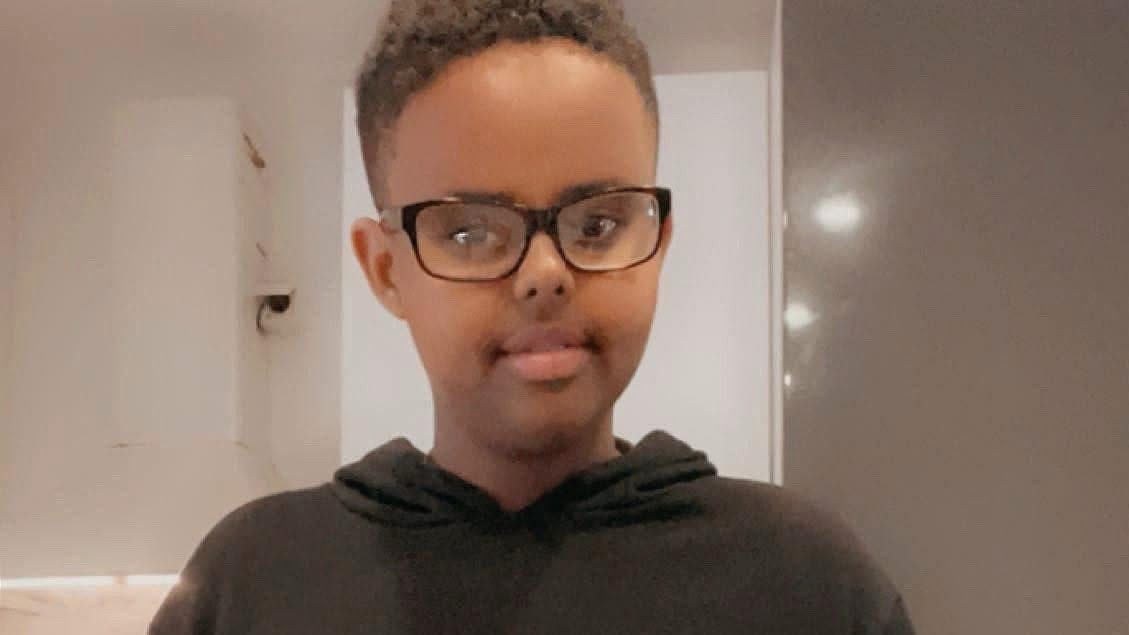
Mohamed, from Nässjö, disappeared in July 2023. He was still alive when his mother first raised the alarm. P4’s investigation established that his phone could have been traced through mobile mast connections to Gubbängen in Stockholm, where he was being held captive in a flat. Police made no attempt to trace it. They sent him a text asking him to get in touch and recorded that there was nothing to suggest he was missing or in danger.
Whether a search would have reached him in time is unknown. Police never tried to locate his phone, although his mother had raised the alarm while he was still alive.
The family’s first contact with police on 25 July went through Mohamed’s twelve-year-old sister. According to the Equality Ombudsman’s court filing, she asked for an interpreter so her mother could speak for herself. The operator replied that the girl was understandable and that using an interpreter would require another call. The ombudsman says that explanation was incorrect.
The operator could understand Mohamed’s sister. His mother still needed an interpreter to give her own account. Her daughter was twelve, dealing with her brother’s disappearance and being asked to carry the conversation with police. The adults taking the call had the authority to arrange professional help and relieve her of that responsibility.
An interpreter was involved in one of the family’s calls, the ombudsman records. Even then, Mohamed’s mother was told she would be called back to provide information. That call never came. She never received the promised opportunity to explain properly what she knew.
Among themselves, police employees discussed whether an interview through an interpreter was “a bit overkill”. In another internal exchange, an employee suggested that a colleague use his “best Somali”. The colleague laughed.
The racism was in the ridicule of a Somali mother who needed their help. They joked about speaking her language while failing to arrange the interview that would have allowed her to explain what had happened to her son.
On 28 July, Mohamed’s sister called twice with information the family had received that he had been killed. Social services also passed information from the family to police. The ombudsman’s filing says the reports were recorded, judged unreliable and left without follow-up; they were not passed from Police Region East to Stockholm. Mohamed was found dead in woodland in Ösmo on 29 July. The family was told the following day. Court filing.
The family had brought police information about a missing child and reports of severe violence. Officers needed to check those reports, establish where they came from and assess the danger to Mohamed. His relatives could pass on what they had heard. They could not do the police’s work for them.
By September 2025, the Police Authority had acknowledged breaking the law and the Convention on the Rights of the Child. Mohamed’s mother should have had an interpreter. His sister should not have been left to interpret in that situation. The authority also accepted that the internal conversations breached its ethical standards.
In its response to the ombudsman’s lawsuit, reported by P4 in May 2026, police argued that the mother had never been refused an interpreter because her daughter, rather than the mother herself, had asked for one. Its lawyer further argued that even if the court found she had been refused, she had not been treated differently from a Swedish speaker, who would not have received an interpreter either. Police also disputed whether the conduct fell within the discrimination law. Police response.
The daughter had asked for an interpreter so her mother could speak. Police understood the request well enough to discuss it among themselves. Their defence nevertheless relies on which family member said the words. It leaves the mother responsible for asking personally for the assistance she needed in order to communicate.
A Swedish speaker can give an account directly to a Swedish-speaking officer. Mohamed’s mother needed an interpreter to do the same. Refusing assistance to both leaves one person able to speak and the other dependent on her child. The police’s comparison ignores that difference to defend withholding the help that would have allowed her to be heard.
The employees made the racist remarks while deciding how to handle her calls. Investigators need to establish whether those attitudes affected their willingness to listen to her and follow up the information she provided. An examination confined to the language employees used would fail to address the decisions they made during the same conversations.
In June 2025, P4 reported that police had not evaluated their handling of Mohamed’s disappearance and that the disciplinary investigators had never listened to the internal calls. The Parliamentary Ombudsmen, known as JO, required the authority to investigate its conduct, including whether the family’s ethnicity affected their treatment. P4’s follow-up.
The disciplinary investigators missed evidence of how employees spoke about the family when they thought only colleagues could hear them. Police managers need to explain why those calls were left out of the examination. The family should not have had to depend on journalists uncovering material that police investigators failed to examine.
The Equality Ombudsman brought its discrimination claim on 28 January 2026, seeking SEK 140,000 for Mohamed’s mother and SEK 160,000 for his sister. It argues that both suffered treatment connected to their ethnicity, and that the daughter’s treatment also breached the Convention on the Rights of the Child. The claim recognises the sister as someone harmed in her own right. She was a child trying to find her brother while carrying responsibilities that adults should have taken from her. DO’s claim.
Sweden’s Discrimination Act covers public employees’ treatment of people who contact them, but does not comprehensively cover the exercise of police powers, as DO explains. DO has repeatedly sought broader protection. Parliament should extend the law so that people alleging ethnic discrimination can challenge it across the authority’s work. Legal scope.
A hearing at Stockholm District Court was scheduled for 13, 14 and 27 May 2027 after earlier attempts to reach an agreement failed. On 23 November, however, P4 reported that DO and police were again discussing a settlement. An agreement would mean the trial is cancelled. The latest report describes negotiations, with no announced settlement or discrimination judgment. Trial dates, settlement talks.
Mohamed’s family must be free to decide, with their representatives, what resolution they can accept. Whatever happens to the claim, the Police Authority should publish a full account of its failures and explain how it will check that interpreters are actually provided. It also needs to establish who intervenes when a missing child’s family calls repeatedly without receiving help.
Police must explain how the employees’ racism was investigated and what consequences followed. Mohamed’s mother is owed an answer about why she never received the promised interview. His sister is owed an answer about why, at twelve, she was left to handle so much of the contact with police while her family was trying to find her brother.

DailySweden
DailySweden's desk of editors, reporters, researchers and investigative journalists. We bring readers factual, truthful and objective reporting on the issues that matter to them.