
Centre’s reversal is a watershed moment for democracy and faith in politics
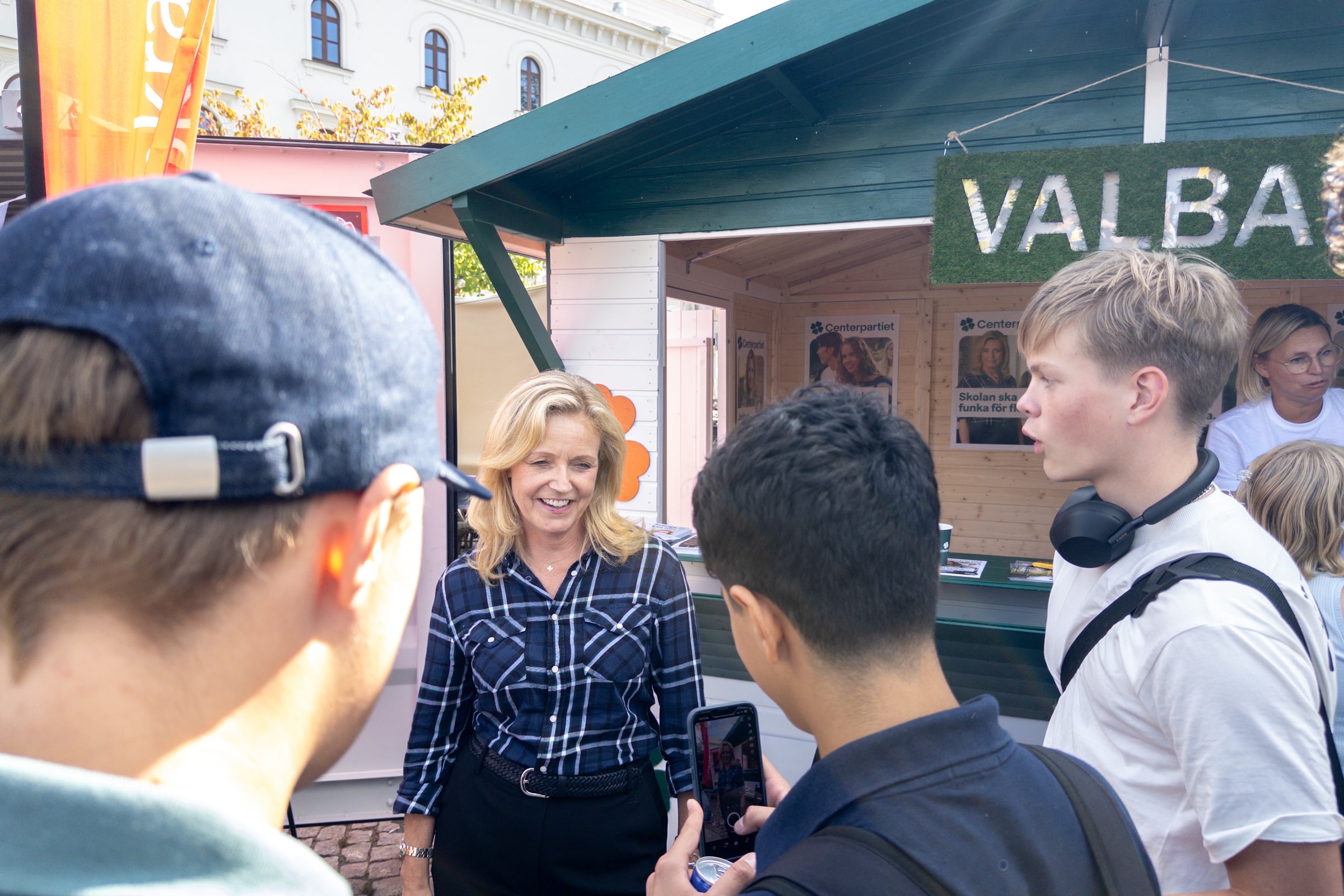
An election promise must mean something after the votes have been counted. Otherwise, voters are being asked to lend politicians power on terms those politicians can rewrite once the ballot boxes close. The Centre Party’s leadership now owes Sweden an answer to a devastatingly simple question: why should anyone believe its next promise?
On Thursday, Centre’s leadership recommended backing Ulf Kristersson as prime minister and joining a government with the Moderates, Christian Democrats and Liberals. The party’s council must still approve that course. Responsibility for proposing it, however, already belongs to Elisabeth Thand Ringqvist and her leadership. SVT’s reporting establishes that distinction.
The promise against which this decision must be judged is clear. In January, Thand Ringqvist said Centre would not accept a government dependent on the Sweden Democrats. On 6 November, the party’s own statement reiterated its election commitment not to support a government cooperating with SD. It expressly said its promises still applied.
Now Thand Ringqvist acknowledges that the proposed government depends on SD allowing it to take office. Her defence is that there is no agreement for organised cooperation. She also leaves open negotiations with SD in parliamentary committees. Svenska Dagbladet reports both the admission and the defence.
That distinction cannot carry the weight Centre places on it.
A party can exercise power without holding a ministry. Keeping SD outside cabinet does not answer the question of dependence on its votes. Centre must explain how the government will secure parliamentary support while honouring the assurance it gave voters. Pointing to an unsigned cooperation agreement is no substitute for that explanation.
The leadership’s strongest argument deserves a fair hearing. Coalition politics requires compromise. Centre also opposed putting the Left Party in government, negotiations have failed to deliver its preferred outcome, and its leaders say the proposed agreement offers gains on climate, growth and rural policy.
But the difficulty of keeping a promise does not cancel the obligation to account for breaking it. Parliamentary arithmetic was always going to matter. If Centre’s assurances depended on a convenient election result, voters deserved to hear that qualification before voting.
Nor did Centre promise that Magdalena Andersson would be prime minister under every conceivable circumstance. Its own November statement called her the most likely candidate and explicitly allowed cooperation with the Moderates. The sharper charge concerns the boundary against SD dependence, a boundary the leadership itself helped voters understand as fundamental.
How can leaders ask people to take such a commitment seriously, then expect them to accept a narrower interpretation when keeping it becomes costly?
The damage risks extending beyond Centre. Every time a categorical promise becomes negotiable after an election, politicians give voters another reason to suspect that campaign language is designed to win consent rather than govern conduct. That suspicion can corrode confidence even in representatives who keep their word.
Voters who believed Centre should not be treated as naïve. Taking an explicit political assurance seriously is a reasonable democratic act. The burden belongs to the people who made it.
Centre’s council should reject this recommendation unless the leadership can demonstrate how its proposed government honours the commitment against SD dependence. If leaders have changed that commitment, they must acknowledge the reversal plainly and accept responsibility for it.
This is a watershed moment because the question reaches beyond who occupies the prime minister’s office. It concerns whether citizens can use political promises to make meaningful choices.
Centre’s leaders were entitled to negotiate. They were obliged to remember whose trust they were negotiating with.

DailySweden
DailySweden's desk of editors, reporters, researchers and investigative journalists. We bring readers factual, truthful and objective reporting on the issues that matter to them.