
Åkesson wants to go left. Where does that leave Centre’s flirtation with an alliance that depends on him?
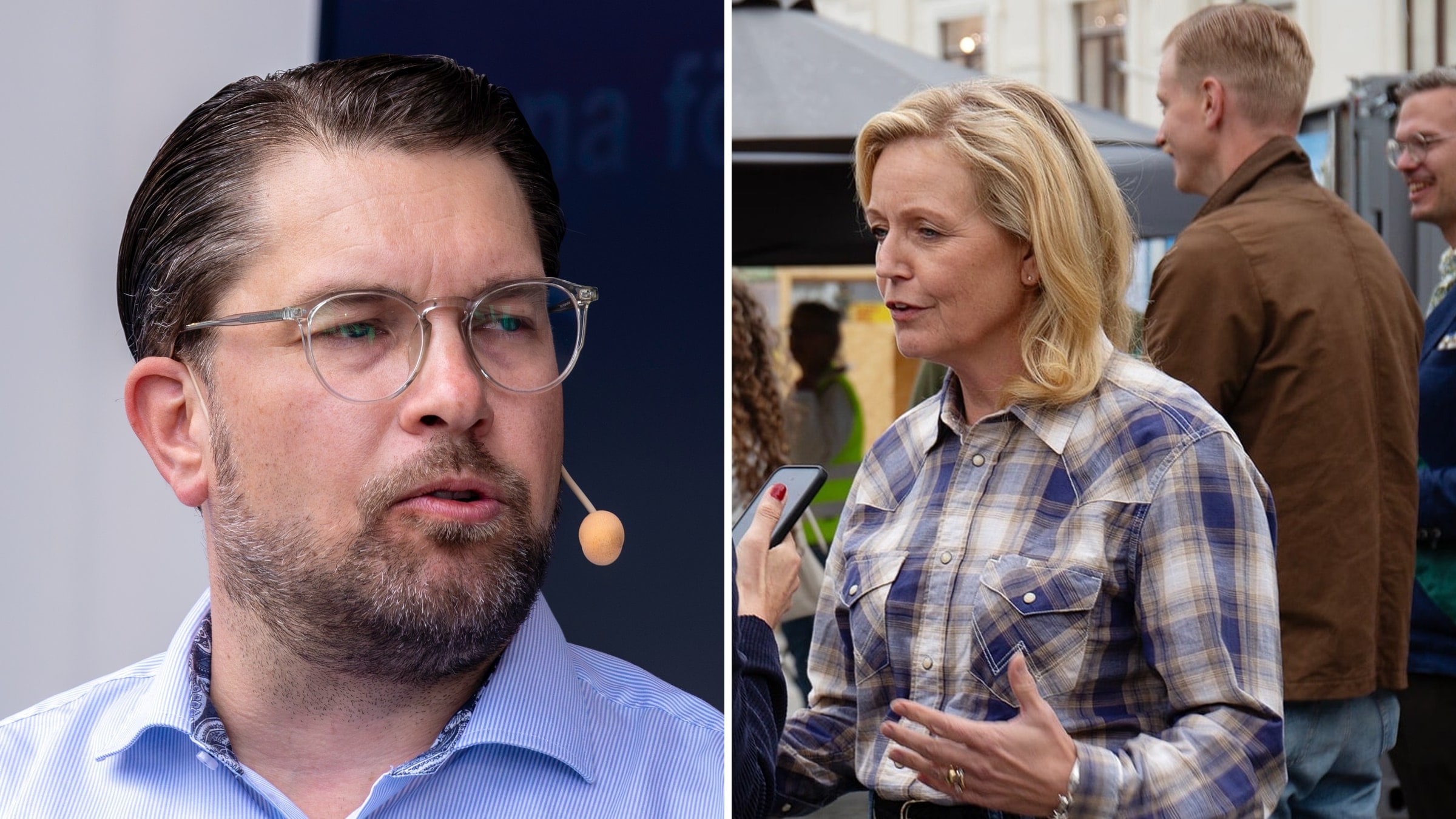
The Centre Party could find itself making an extraordinary political journey: leaving the prospect of cooperation with the left to join a centre-right government whose survival depends on a party that wants to shed its own right-wing economic profile.
That is the contradiction in Jimmie Åkesson’s latest offer. On 6 November, the Sweden Democrats’ leader dropped his demand for ministerial posts and offered to tolerate Ulf Kristersson as prime minister before going into opposition. He also said SD wanted to move away from the right-wing identity acquired through the Tidö partnership and recover what he describes as its position between the blocs. Sveriges Radio reported both parts of that announcement.
For Centre, the second part deserves as much attention as the first.
Åkesson has not announced a conversion to left-wing politics or an alliance with the Social Democrats. His stated dissatisfaction concerns SD’s profile on economics, distribution and welfare. But that distinction makes Centre’s dilemma more concrete. Those are precisely the areas in which a government must negotiate how money is raised, spent and shared.
Centre’s stated position remains that the Left Party must not enter government and pull Sweden sharply leftwards. It also says it will neither support a government containing SD nor one cooperating with it. Elisabeth Thand Ringqvist has asked both Magdalena Andersson and Kristersson to explain which policies they would pursue and how they would secure parliamentary support.
Those are reasonable questions. Centre must apply them just as rigorously to a revived Alliance as to a Social Democrat-led government.
An administration comprising the Moderates, Christian Democrats, Liberals and Centre would lack a parliamentary majority. Unless it secured support across the other side of the chamber, it would need SD to help its budgets survive. Even Timbro’s argument in favour of trying this arrangement acknowledges the need for budget cooperation with either SD or the Social Democrats.
The distinction is already becoming explicit. On 10 November, Sveriges Radio reported Åkesson’s statement to Aftonbladet that a government wanting support for its budget must seek it in parliament, where SD would be open to negotiations. Tolerating a prime minister does not amount to endorsing his economic programme.
Moving into government would therefore leave Centre facing an awkward negotiation. It could agree an economic programme with its old allies, only to discover that Åkesson wanted concessions in the very direction Centre had hoped to avoid.
Consider the possibility of a dispute over welfare spending or unemployment insurance. If SD demanded a more generous settlement than the government proposed, what would Centre do? Accept the compromise? Seek help from the Social Democrats? Risk defeat? These are hypothetical choices, but a credible government proposal needs answers to them.
There is a fair argument for exploring the Alliance option. Centre shares economic priorities with other centre-right parties, and minority governments can negotiate workable agreements. It is entitled to test whether that route offers greater influence.
But an agreement that depends on Åkesson’s continuing cooperation cannot honestly be presented as freedom from his influence. Removing SD ministers from the proposed cabinet does not remove SD votes from parliament.
Nor does Åkesson’s economic repositioning establish that he has moved towards Centre on liberal values. Centre would have to assess those differences separately. A softer position on welfare spending cannot, by itself, resolve its objections to cooperation with SD.
The question for Centre is therefore larger than whether it can return to its old political home. It is whether that home can deliver the policies and independence it promises.
If Centre leaves negotiations with the left because the economic compromises are unacceptable, what exactly will it have gained if Åkesson demands similar compromises from the right?

DailySweden
DailySweden's desk of editors, reporters, researchers and investigative journalists. We bring readers factual, truthful and objective reporting on the issues that matter to them.